This is the next post on first principles and my attempt to understand them. Some of the terms are introduced in the previous posts, Nature, Nurture, and Niceties and What the Hell Are First Principles?, if you care to give those a read.
As we’ve established, first principles include both fundamental truth and fundamental belief. Here, we’re focusing on the truths—the bedrock of the laws of nature. This is where the MBAs get confused. They borrow the term, but don’t fully grasp its meaning. You see, the physics building was way down on the other side of campus.
But if you were on the campus of the University of Pennsylvania in 1997, you might have bumped into a young Elon Musk learning both economics and physics—two subjects that are very close to bedrock.
When I first started looking at first principles, I was directed towards Tesla, SpaceX, and specifically Musk. He is perhaps the most outspoken advocate of this way of thinking. If you search “first principles” on Google, Musk will be mentioned or featured in 70% of the first page links.
I know, that might be a painful fact for my CyberTruck-burning readers, but please don’t hack this site just because of politics. If you’ve made it this far, you already know that the laws of your tribe are way down the list as far as laws go.
Tesla: Rewriting the Recipe
Seven years and two start-ups after graduating from UPenn, Musk had $180 million burning a hole in his pocket. It was 2004, and he was joining (and funding) Tesla. But Musk didn’t see just a car company; he saw first principles in action.
Detroit’s giants—Ford, Chrysler—clung to tradition and nationalism. Laws of the Tribe. If your grandparents were anything like mine, they’d never buy a German or Japanese car, and that’s understandable. But those American-made cars were ranked behind their overseas competitors in nearly every measurable way. Tribal loyalty propped them up, but they were using a blueprint that was dying a slow death.
Tesla’s founders asked themselves: if they had to start the automotive industry all over again, from the ground up, how would they do it? The answer wasn’t going to be found in Detroit—it was out west in Silicon Valley.
Tesla started small—retrofitting a Lotus with lithium-ion batteries. It was fast, electric, and a lot of fun to drive, but it wasn’t based on principles. It was reasoning by analogy. Take Detroit’s recipe, swap the engine for an electric motor, and call it a day. It was a Frankencar, cobbled together from OEM parts—the cut-and-bake cookie of automobiles. In hindsight, all cars were Frankencars, and that recipe is the reason every American car startup for 80 years had failed. Tucker, DeLorean, Fisker—they all went belly up following that dusty old Detroit playbook.

The original Tesla Roadster was a modest, niche success. It was also a total nightmare. But when the team awoke from that nightmare, they understood firsthand, from suppliers to sales, all the issues with the industry.
Their vision wasn’t just a cleaner car, but a better car. Faster, safer, more fun. And eventually, more affordable.
Musk is fond of saying, “The only rules are the laws of physics. Everything else is a recommendation.” No law of nature demanded that hundreds of parts be used to build a drivetrain. An electric motor has just 20 moving parts versus an internal combustion engine’s hundreds.
Simplicity. Logic.
At the Axel Springer Awards, Musk said, “Most people tend to think by analogy or by comparison with something that already exists. This is a mental shortcut that requires less brain strain, but it’s hard to get fundamental insights unless you think about things from a first-principles standpoint.”
The Analogy Trap
We’ve all heard companies described as “the uber of…” and I’m quite fond of the technique. I call it Crossing the Streams. Take two or three products and mash them up to yield something useful. But that technique has its downside. You can get outmaneuvered by a more principled approach.
Take Amazon, for example. Books + Internet was a pretty good equation for them, crossing the streams of e-commerce and books. Then they added other products, with music CDs being a big line of business. Instead of Barnes & Noble + Internet, it was Tower Records + Internet.
But what happened to Amazon’s CD business once Apple launched the iPod and iTunes? This was a hard way to learn a lesson—the loss of billions in revenue—but Amazon learned it. That lesson became the driving force behind their Kindle e-book business. They feared that Apple’s iPad would squash their book business the way iTunes did CDs, so they cannibalized it themselves.

Tesla didn’t want to make cut-and-bake cookies, and they didnt want to cross the streams. They wanted to write recipes from scratch.
Breakthroughs in batteries allowed them to push into adjacent markets, like power storage for homes and businesses. Breakthroughs in power transfer allowed them to vertically integrate energy and created the Tesla Charging Standard, now known as the North America Charging Standard—the technology used by nearly all the major charging networks and EV manufacturers. Breakthroughs in manufacturing allowed them to streamline their production.
They asked, why make cars by bolting together different panels? Why not cast the frame from one piece of metal? The Giga Press allows them to produce vehicles in large pieces. For example, the rear underbody of the Model Y, which used to be made of 70 parts, is now produced as one giant piece. Can they go even bigger? At Tesla’s recent all hands meeting, Musk asked, “How big can a casting machine be? What are the limits of physics? Let’s find out!”
The best part is no part. As simple as can be.
SpaceX: Making the Impossible Affordable
This same truth drives Musk’s other ventures. Before SpaceX, what was the single biggest issue with the rocket business? Why hadn’t space exploration made any real progress over the preceding generations?
It’s bloody expensive, that’s why!
But the real question was why it was so expensive.
NASA’s Space Shuttle program cost about $1.5 billion per launch (in 2025 dollars) to carry 27,500 kg to low Earth orbit (LEO)—around $54,500 per kg. SpaceX costs about $67 million to deliver up to 22,800 kg to LEO, working out to roughly $2,940 per kg.
The Space Shuttle was over 18 times more expensive per kilogram than SpaceX’s Falcon 9. Even NASA’s newer Space Launch System (SLS) clocks in at over $2 billion per launch for up to 95,000 kg to LEO, or about $21,050 per kg—still over 7 times pricier than Falcon 9.
“Cheaper and better” has always been a pretty good sales pitch, but how do you make it happen?
What first principles allowed SpaceX to make more reliable rockets for a fraction of the price?
The Reusability Breakthrough
Breakthroughs in reusability allowed them to launch the same rockets multiple times. Rockets were traditionally expendable—built to burn up or crash after one use. The idea of a rocket surviving reentry, flipping upright, and landing on a dime sounded crazy. Engineers figured it was possible, in theory, but the road from theory to practice can be a long one. Still, they wondered, was there any law of physics that said it couldn’t be done?
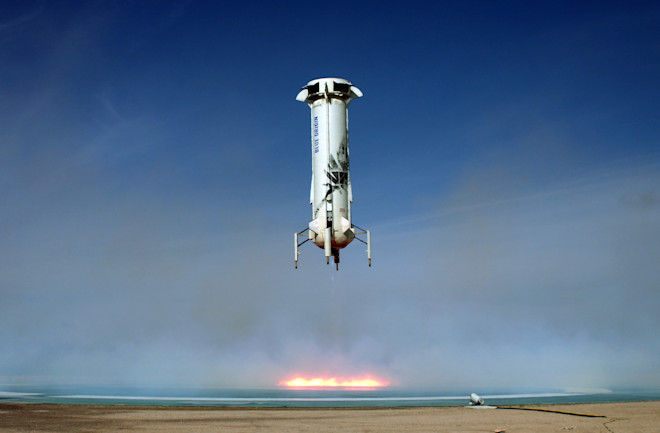
On November 23, 2015, Jeff Bezos’ Blue Origin landed their New Shepard rocket. Though it was suborbital, not orbital, so the scale and complexity were less intense, it was a signal that SpaceX, despite their failures, was on the right track. Less than a month later, on December 21, 2015, the Falcon 9 first stage touched down at Cape Canaveral after delivering satellites to orbit—and it was game on for reusable rockets.

Material Choices: Steel Over Carbon Fiber
While reusability gets all the hype, more mundane decisions, like materials, can offer a different perspective on first principles and the laws of nature.
For the Starship rocket, SpaceX started working with stainless steel. That decision started like all the others, breaking a problem down to its fundamental truths and reasoning up from there. Why use carbon fiber? It’s pricy, complex to manufacture, and required extensive thermal protection for reentry.
Looking at material properties, cost, and reusability, they pivoted to stainless steel—a cheap, heat-resistant, and durable alternative. This was just physics and economics: the laws of nature, and the laws of human nature.
The decision traded weight for simplicity, cost, and resilience. Stainless steel is heavy, and when you are trying to get to space, heavy is not good. But did it need to be that heavy? To offset steel’s weight, SpaceX engineered it thin—down to 4 millimeters—relying on its natural high-temperature strength and reflectivity to handle reentry heat. Unlike the Space Shuttle’s aluminum frame, which demanded 20,000 fragile ceramic tiles, Starship’s steel acts as a heat sink, reducing tile use to just the hottest spots. This rethink slashed costs, and sped production.
Beyond Physics
Musk’s world of rockets and roadsters leans heavily on the laws of nature—physics—but most of us aren’t wrestling with gravity or voltage. We’re navigating the laws of human nature, the systems of society, and the quirks of the tribe, where first principles stretch from hard science to human sense. Physics forges fundamental truths, but what happens when we shift to beliefs?
Up next, we’ll explore what separates a chef from a cook—and why it matters in life and work.
Additional Resources
- The Everything Store, by Brad Stone (Check it out)
- Elon Musk, by Walter Isaacson (Check it out)
- Note on Affiliate Links
If you enjoyed this post, please share it with a friend.







What do you think?