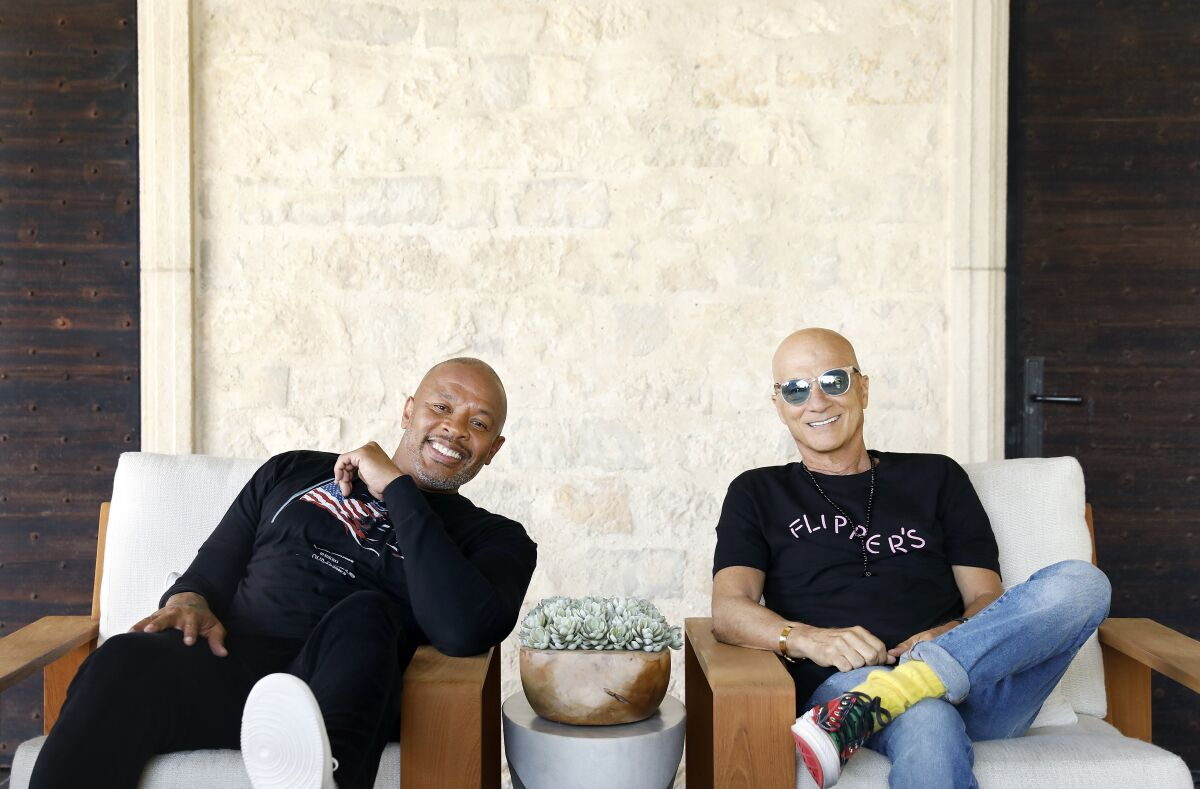
Jimmy Iovine co-founded Interscope Records and later became chairman of Interscope-Geffen-A&M. He’s also an entrepreneur, founding Beats Electronics with Dr. Dre, which was later acquired by Apple for $3 billion.
This post is the first in a series called “what I’ve learned from” where I’ll list a handful of stories, quotes, and lessons from one source.
1.) Follow your interests.
“Ed Sullivan. The Beatles. Ground Zero. I remember sitting on my mother’s blue shag carpet, right in front of the RCA TV. It was a month before my 11th birthday. And I begged for a guitar the day after that.”
Jimmy played bass and said, “The worst guitar player plays bass. That’s the rule. That’s how it is.”
He took his music-playing career as far as opening for a young Billy Joel who was in The Hassles at the time.
“We weren’t very good, and that’s when frustration first set in. They’re not going to ask you to join The Rolling Stones. I was thinking — not what I was gonna do — I was thinking what I wasn’t gonna do. My father had planned for me to go down to the docks. He had a job for me. I just, I wanted to do something that felt special.”
Jimmy still loved music and “just wanted to touch it.” To be around it. So that’s where he set his sights.
Sounds simple, right?
What is hard to see early in your life is this; if you are sufficiently interested in something, you’ll get sufficiently good, and a sufficient amount of dollars and status will follow. So, you don’t need to chase those things directly.
Charlie Munger said, “I have never succeeded very much in anything in which I was not very interested. If you can’t somehow find yourself very interested in something, I don’t think you’ll succeed very much, even if you’re fairly smart.”
Save yourself some time and heartache. Follow Jimmy’s example and Charlie’s advice, follow your interests.
2.) Closed mouths don’t get fed.
“I really got lucky. My cousin Pat knew this guy named Steve Tudanger, who was a background singer for the Archies. He was a writing partner of a legendary woman named Ellie Greenwich. She wrote and produced Cherry Cherry on Bang Records. Da Doo Ron Ron. I Can Hear Music. Be My Baby. Chapel of Love. She wrote all those records. She wrote River Deep – Mountain High.
Ellie did an album called Let It Be Written, Let It Be Sung. So, she invites me to the session. I’m in the studio, and the engineer was named Elliot Scheiner. He ended up doing all the Steely Dan records, but in those days, he did whatever.
So, I go in and she’s out there singing Chapel [of Love].
Elliot Scheiner is there turning these big knobs, and at the end of the session, a really pretty girl came in and he said, ‘I’m gonna go.’ And they left.
At that moment I just said, ‘I want the whole life.’
So, Ellie Greenwich got me a job in that studio.”
She got Jimmy a 90-day trial with A&R Recording. He had his chance. Unfortunately, it didn’t last.
“Don Hahn was the chief engineer, he was everybody’s boss, he said, ‘You know, I’m sorry, this is not for you.’
I called up Ellie Greenwich on the way home. I called from a pay phone, I was crying, I said, ‘I got fired on the 89th day.’
She said, ‘Hang up, call me back in 10 minutes.’
Ellie called The Record Plant. I called her back and she said ‘Don’t go home, go to 321 W 44th Street. Ask for Eddie Germano and Roy Cicala.’”
That is how Jimmy got started at The Record Plant.
The old saying is “It’s not what you know, it’s who you know” and that is close to the truth. But it leaves out an important part of the equation.
You need to leverage who you know. You need to ask.
Kanye West was an up-and-coming producer for Roc-A-Fella Records, but he wanted to be a rapper. How did he bridge the gap? He leveraged his relationships from producing The Blueprint and asked Jay-Z for a verse on The Blueprint 2.
“Closed mouths don’t get fed. You wouldn’t have said nothing, you wouldn’t have been on that.”
That’s what Jay said after Kanye laid down his verse on The Bounce. His first appearance as a rapper on a Roc-A-Fella release.
It’s not enough to network. It’s not enough to know people. You need to be willing to ask for your opportunity.
3.) Find Mentors.
“That was where my career started, it was 1973 and I worked in The Record Plant until I came to California.
I was a staff engineer. And then I started producing.
Roy Cicala was the greatest engineer teacher ever. Very eccentric guy. We didn’t know what it was at the time, it was OCD, he wouldn’t touch things that other people touched.
As assistant, it was like boot camp. It was hard.
“My initial impression of Jimmy was, he was a sponge. That he picked up everything he heard or saw.”
David Geffen
He liked me. He’s teaching me. But because he doesn’t want to touch anything, he would make me do it.
Now I’m really learning because I’ve gotta be. I’m 24/7 with this guy. This guy was the busiest engineer in New York City. He’s doing John Lennon. Anybody who came to The Record Plant wanted him.”
Meeting a mentor is the fourth phase of The Hero’s Journey. The Hero encounters someone who can advise them and get them ready for the journey ahead.
Luke meets Obi-Wan, and Harry meets Dumbledore.
Ryan Holiday meets Robert Green, and J.J. Abrams meets Steven Spielberg.
It is an old concept, but in some ways, it’s the future of learning. Venture Capitalist John Doerr recommends you “Find a way so that at every point in your life you sustain a mentorship relationship with somebody.”
4.) Be of service.
“One day, Roy called me at home, it was Easter Sunday, and he said, ‘I need you to come in today to answer the phones.’ I went to my mother, I said ‘Mom, I gotta go to work.’ She said, ‘Are you crazy, it’s Easter Sunday. Your family is coming over, your aunts and uncles, all your cousins, we’ve got to go to church.’
I went in to work, and when I got there Roy said, ‘I just wanted to see if you would come in on Easter Sunday. The assistant engineer can’t make it. John [Lennon] and I want you to do it.’”
That’s when I graduated to second engineer. Easter Sunday 1973.”
Keep in mind that Lennon and his appearance with The Beatles on Ed Sullivan is what started Jimmy on this path. His dream of being in music was coming full circle.

“I didn’t think they were the same person. It was just too much. I’m just like, how do I not get thrown out of this room? Because I’ve been thrown out of a few rooms. How do I not get thrown out of this room? How can I just overdo it? How do I just serve? You know, how do I just be of service?
Tea!
I learned how to make John Lennon’s tea. He wouldn’t let anybody else make it. I timed it exactly, you know.
The way I am about everything, I was about that fucking tea.”
In other words, how you do anything is how you do everything. Jimmy started with the tea, he served, and he made himself useful.
“As time went on, Roy, like all of us, starts handing off things to other people.
So now he [Lennon] decides he wants to use Phil Spector. Phil Spector won’t come to New York. Roy says ‘I want you to come with me to California because you’ll set the studio up for me. I want it to sound exactly like the Record Plant. I want you to turn it into the Record Plant.’”
5.) Adapt and overcome.
“I go to the studio, I get in, I start tuning the speakers to get the sound I know Roy likes, so I’m playing Mind Games. I’m playing some other records that I assisted on with him.
Now I gotta get the setup, so I go to Phil’s house. I go into the foyer and I say, ‘I’m here to see Phil Spector.’
‘Who’s there!’
I said, ‘I’m here on behalf of John Lennon and Roy Cicala, I need the setup for tomorrow.’
‘Okay. Eight musicians, guitar, bass, three guitars, datta datta da, eight musicians.’
I go to A&M the next day and I’m setting up.
I made it look like, I’m telling you, it was a painting. Every cable is wired. You couldn’t trip if you wanted a trip. Every microphone, every music stand, every echo tuned, every patch cord in. Every piece of equipment, tape everywhere, written down. I was nuts about getting this right.
I’m the first one in studio. Two guys walk in. Four guys walk in. Three more guys walk in. 36 guys walk in.
‘We’re here for the Phil Spector session.’
‘We’re here for the Phil Spector session.’
Phil, from when I left his house to the next morning hired 36 musicians.
Eight guitar players. Two drummers, Hal Blaine, and Jim Keltner. Two bass players. Six horns, three pianos. Leon Russell and Barry Mann playing the piano. Three background singers, Cher, Harry Nielsen, and I forgot who the other one was.
I’m like, oh fuck, so I gotta rearrange, I said ‘give me an hour. I’ll rearrange.’
That was the first day.
The second day, I was like, ‘I’m ready for this motherfucker.’”
George Bernard Shaw said, “All progress depends on the unreasonable man” and in this case, Phil Spector was completely unreasonable. What the Shaw quote misses is the adaptability required from everyone else to make the unreasonable happen.
Jimmy adapted to Phil and showed John that he was someone they should keep around.
6.) Don’t be embarrassed by what you don’t know.
Roy was out for six weeks after the birth of a child so Jimmy, at 21 years old, did all the overdubs on Walls and Bridges for John Lennon.
It was 1974, Elton John was huge, and Lennon was having him into the studio to record harmony vocals on ‘Whatever Gets You thru the Night.’
“So now we’re recording the vocals, I’m saying to myself, I never really recorded a piano without Roy. I hope Elton doesn’t play the fucking piano. They’re facing each other [Lennon and Elton John], with these two really dynamic microphones, singing. And I hear Elton John say, ‘Let me try piano.’
I had to remember how I set it up for Roy. And I just did that.
Elton walks in [to the booth] and he says, ‘Hey, great piano sound.’ And Lennon says, ‘That’s why we use him’, you know, because he knew I was nervous. But he [Lennon] would just give me a shot on anything and everything. It wasn’t because I was talented. It was because he liked me. And he felt he could trust me. He told me that once. He said, ‘You know, working with me, people are gonna ask you to get to me. And I can tell you’re the kind of kid that won’t.’
I learned. Don’t be embarrassed by what you don’t know. Because it’s charming, and it’s open, and it’s honest. And the people around you would rather hear you say you don’t know.”
Most people have insecurities about what they don’t know. Instead of asking, you’re tempted to be a know-it-all. Inevitably missing something and making a mistake.
But the biggest mistake is not in the immediate moment. It’s the lost opportunity to learn, and for Jimmy, it was an opportunity to learn from one of the greats. Can you imagine leaving those sessions having learned nothing from John Lennon? Simply because your ego wouldn’t let you admit what you didn’t know?

7.) Stay in the fucking saddle.
In 1975 Jimmy was working for a tough client, Bruce Springsteen and the Born to Run recordings. One day the engineer didn’t show up, so the producer [Jon Landau] looked at Jimmy and said, “Can you do this?” Jimmy wasn’t really sure if he could do it, but said “Yeah, why not?” And that was his first solo flight.
Jimmy wanted to quit Born to Run because Bruce was being Bruce. Relentless.

Springsteen’s standards seemed insurmountable, and Iovine almost left the project. Landau pulled him aside and offered some advice: “Stay in the fucking saddle.”
Jimmy said, “I’m done. I kill myself for this guy, I work hard, I do everything I possibly can…it’s unacceptable.”
“Jimmy,” Landau responded, “you’re missing the big picture. What are we here for? We are here to help Bruce make the best record he can. That’s the job. We’re not here to make you happy, we’re not here to make me happy. We’re here to contribute to the project–and it’s Bruce’s project.”
Landau said, “You go back there and say to Bruce, I’m here to support you. This is not about me. It’s about the album. Tell Bruce that, and you will have a friend for the rest of your life, and you will have learned a big lesson.’”
He stayed in the saddle, Bruce and Jimmy bonded, and Jimmy played a part in one of the best albums of all time.
8.) When to go for it.
“I don’t wanna sound altruistic and I don’t wanna sound phony. David Geffen sold his company. So, I was like, wait a minute. I think he does what I do. He just made all this money.
So, I said to David, ‘Hey, I wanna start a record company.’
David said ‘You should do it. There are a lot of record people a lot dumber than you.’
I said, ‘I believe that.’”
Jimmy had dealt with many people in the record business in his years as a producer. He knew who he’d be going up against and he knew how to do it better.
He went on to start Interscope.
9.) Getting an early win.
“The first artist we signed was Gerardo, ‘Rico Suave.’ I wanted a hit, I didn’t give a shit if it was a cha-cha-cha, I wanted my promotion team to have a hit. And it worked. Then Tom Wiley brought in Primus, and then Helmet. Then we got Tupac, and then we got No Doubt.”
An early win, a hit, can be critical for a new company. It builds momentum, it provides stability, and it contributes funding to take on other projects.
Jimmy learned the value of a hit to get people interested in an album. He famously negotiated with Bruce Springsteen to let Patty Smith record ‘Because the Night.’ And did the same with Tom Petty to secure ‘Stop Dragging My Heart Around’ for Stevie Nicks.
What those hits did for Smith and Nicks, is what Rico Suave did for Interscope. It legitimized the whole thing.
“It wasn’t that Jimmy wanted to be the number one guy, it was like, he was ambitious for you. And he was ambitious for me. You always felt that his whole goal was for the world to see what he was seeing.”
Patty Smith
10.) If it was easy, everybody would do it.
“I wasn’t in the record business, so I didn’t know anybody, but they [artists] would bring me in. I would get them out of their deals, and I would figure it all out.”
Jimmy was small and agile. Willing to take risks, and that paid off. He found artists that he loved, that he knew would sell albums, but also had a little bit of baggage.
Trent Reznor wanted Nine Inch Nails out of its deal with TVT, so Jimmy negotiated the deal.
Dr. Dre had multiple lawsuits pending against him and couldn’t find a label for The Chronic. Jimmy told Dre “If you don’t move on me, I’ll clear up all the lawsuits.”
“Suppose you are a little, nimble guy being chased by a big, fat, bully.” Paul Graham describes a relevant scenario for any new business. “You open a door and find yourself in a staircase. Do you go up or down? I say up. The bully can probably run downstairs as fast as you can. Going upstairs his bulk will be more of a disadvantage. Running upstairs is hard for you but even harder for him.
What this meant in practice was that we deliberately sought hard problems.”
Jimmy identified the same thing. He was able to take on the difficult work that large labels were unwilling to do and locked in generational talent for Interscope.
11.) Find your game changer.
“You know, Dre and Suge just came to the office and played me The Chronic. I had tried to listen to Hank Shocklee’s [Public Enemy] records. But if you’re an engineer in music and rock’n’roll, you’re trying to get everything to be really present and really powerful.”
Jimmy didn’t like or understand the muffled sounds of hip hop during that era.
“They didn’t have the 808 on the control. And then all of a sudden Dre walks in and it sounds like Pink Floyd. It’s one of the greatest recordings I’ve ever heard. Any kind of music.
So now I feel like I know something about this. I don’t understand samples and he has everybody playing live, got a few things [samples] in there, but the bass and drums are players.
So, I’m like, ‘Who produced this?’
Dre said, ‘Me.’
I say, ‘Who engineered it?’
Dre said, ‘Me.’
I’ll never forget it. I said, ‘This guy will define Interscope.’”
“Just based on clothes, cars, and hairdos, we had nothing in common with Jimmy. We were coming out of punk rock, and punk rock is not about shiny things. Actually, it’s about defacing shiny things. Jimmy was a bit slick for us. But he happens to you. He’s like a virus, that enters the system, uninvited. Takes over all your main origins, gets to the brain. It’s like he knows this is going to work out well for both of you.”
Bono
Jimmy didn’t have much in common with Dr. Dre and Suge Knight either, but he knew quality production and engineering. And he knew a hit when he heard one.
12.) Greatness as a goal.
Jimmy quotes Bruce Springsteen, “I didn’t want to be famous. I didn’t even want to be rich. I wanted to be great.”
Kids today don’t operate in this domain, but maybe they should.
“What happened is that fame has replaced great as a currency. When you we were growing up, great was the currency. Even if you were a pop band, you were trying to be better than the other pop band. Now you want to be more famous, and you don’t have to be great. Instagram is going to keep you around and keep you making money, whether you make a great second album or not. You see it all the time, there are artists out there that have just average albums, and they’re bigger, they get television shows, they get on The Voice. It doesn’t matter anymore because fame has replaced great. It’s fame as currency. It used to be you had to be great to be famous.”
In the (terrific) documentary Shangri La, Rick Rubin said “I don’t project what anyone else is going to think. My feeling is the audience comes last. If you’re lowering what you do to what you think they are gonna like, you’re not working up to the level of greatness. You want to make things so great, they never would’ve imagined they wanted to see it. And that’s what’s really exciting.”
Bruce, Jimmy, and Rick are all talking about the same thing. Focus.
Focus on the work. On making the best possible thing you can. If you can do that, you’ll reach your own level of greatness.
Make that your goal, not getting likes, money, and attention.
And guess what, if you reach greatness, the rewards will come.

And that is where we’ll leave it. Some advice from Jimmy Iovine that might not make you rich, and might not make you famous, but it can certainly help in making you great.
Primary Sources: Tetragrammaton, The Defiant Ones, Rolling Stone








What do you think?