You ever hand someone a baby?
Fun fact, you don’t just toss the kid across the room.
You make some eye contact, gently pass the baby over, and just before completely letting go you ask if they’ve got ’em, which is half question, half confirmation.
And even then, you linger for a moment to make sure all is well.
Giving feedback is a little like that.
Feedback can be a gift, but like any gift, it can be weaponized.
Jocko Willink says that even people who are open to feedback don’t want to be “stabbed in the eye with it.”
Giving feedback takes skill and precision if you want it to land. And that is the first question you need to ask. Do you really want it to land? If that’s not important for you, it’s not really feedback, it’s criticism. There’s a difference.
If you do want it to land, if it’s actual bonafide feedback instead of criticism, my preference is to use the Apollo 13 Feedback Framework.
The Apollo 13 Feedback Framework:
Apollo 13 was the seventh crewed mission in the Apollo space program and was intended to be the third to land on the Moon. The mission was cut short, they had an issue with the service module oxygen tanks.
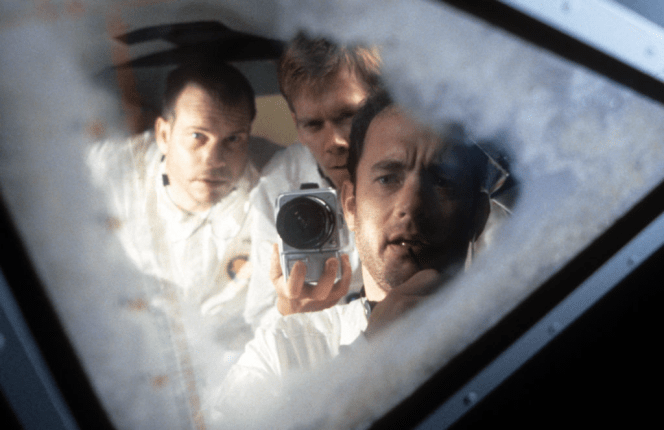
The Apollo 13 mission was dramatized in the 1995 film by the same name, starring Tom Hanks, Bill Paxton, Kevin Bacon, Gary Sinise, and Ed Harris.
Great cast, great movie.
When we talk about the Apollo 13 Feedback Framework, what we are talking about is how we get the command module Odyssey back home, how we get it from space to the earth’s surface.
In this analogy, the command module Odyssey is your feedback. Full of precious cargo.

Earth is the person you care about enough to share this wonderfully helpful and constructive feedback.

And physics is, well, physics. The forces you’ll need to keep in mind when making this attempt.

You’ll recall from the movie, or just your general understanding of this beautiful rock we live on, getting through the earth’s atmosphere is no cake walk.
News Anchor:
In order to enter the atmosphere safely, the crew must aim for a corridor just two and a half degrees wide. If they’re too steep, they will incinerate in the steadily thickening air, if they’re too shallow, they’ll ricochet off the atmosphere like a rock skipping off a pond.
The angle of approach was a key consideration for Apollo 13, and it should be a key consideration in your feedback.
If your angle is too shallow, you’ll bounce right off the atmosphere and into deep space. Like a rock skipping off a pond.
Bouncing off into deep space with your feedback means it was not heard, it was not acted on, and it means you feel like a big fat jerk.
On the flip side, if your angle is too steep, you will create too much friction, and burn up. You’ll never make your way through the atmosphere to the surface.
You need to prepare and get it right.

Is the person ready for your feedback?
Are you ready to give feedback in a constructive way?
Important questions, right? So, let’s jump in. Here are the five parts of the Apollo 13 Feedback Framework.
1.) Free return trajectory or direct abort:
When NASA came to understand the issues with Apollo 13, they knew the crew would not be landing on the Moon and needed to return home as soon as possible. The options were a direct abort, or a free return trajectory.

Direct is ideal in an emergency. When things are time sensitive you feel the need for immediate action.
Immediate action takes a lot of fuel though, and a lot of effort. And it doesn’t make use of your current heading and momentum.
It’s riskier. If things aren’t going well the last thing you want to do is yank the wheel and hit the gas.
Ask yourself, does this issue require you to drop everything?
If you quickly deliver this feedback, will you be able to ensure your delivery (angle of approach) is dialed in?
On the other hand, free return trajectory uses your momentum and the gravity of the moon to “slingshot” you back towards earth. It’s more efficient if you happen to be low on fuel. It takes more time but allows you to work through the scenario without rushing.
GENE KRANTZ (FLIGHT DIRECTOR):
Hey, hold it. Let’s hold it down. Let’s hold it down, people. The only engine we’ve got with enough power for direct abort is the SPS (Service Propulsion System) on the Service Module. What, Lovell has told us it could’ve been damaged in an explosion, so let’s consider that engine dead. We light that thing up, it can blow the whole works.
It’s just too risky. We’re not gonna take that chance. And the only thing the Command Module is good for is the re-entry, so that leaves us with the LM… which means free return trajectory. Once we get the guys around the Moon, we’ll fire up the LM’s engine, make a long burn, pick up some speed, and get them home as quick as we can.
When you give feedback to someone, you need to select the best path based on the time, location, and energy you have available to you. Not everything is a five-alarm fire. Not everything is a blown oxygen tank in space.
Is it urgent enough to make a direct abort and turn the ship around? Do you have the energy for such a maneuver? How will the change in plan impact other operations?
A complex issue that is not urgent might benefit from some extra time. You might be better prepared if you sit on the feedback for a moment, even if that means traveling around the dark side of the moon. Think through the situation in detail while using your momentum and physics to do some of the work.
This allows you to contemplate the real mission, not gathering rocks on the moon, but getting home.

2.) Keep your target in the window:
Regardless of the plan you choose, you should always keep your target in the window. This may require a number of “thirty second burns” to stay on your flight path.
Track this from an early stage.
Apollo 13 had their issue with the oxygen tanks 200,000 miles from earth. That is when they started planning their way back home. And at that point, they already knew they were off course and would need to spark the engines to get back on their approach path.
But they needed to keep their target in mind.
JIM LOVELL:
– Well. Now look, Houston. All we need to hold attitude is one fixed point in space. Is that not correct?
CAPCOM:
– Yeah, roger that, Jim.
JIM LOVELL:
– Well, Houston, we’ve got one! If we can keep the Earth in the window, fly manually, the co-ax crosshairs right on its terminator.
At work or at home, you might get distracted, you might get pulled off course as well.
But if you can keep your primary objective “in the window” while you maneuver, you’ll be sure to get where you are going.
When giving someone feedback, it’s common to get distracted, to hit the gas, to let that feedback drift off course. You start out talking about an excel file and it turns into accusations or finger pointing. It gets personal. You stray from your initial target.
Dax Shepard has a saying, “Unless your feedback is making my chocolate chocolatier, save it. Mentioning how much you love strawberry is not good at this juncture. It needs to be additive.”
And for Apollo 13, any action that wasn’t directed at getting back home was not useful. It needed to be their singular focus.
Don’t let that happen. If you do, your feedback will not land.
3.) Things will get hot:
7,8000 Kelvin, to be exact.
JULES BERGMAN (on TV):
The heat will build up to as much as three or four thousand degrees Fahrenheit.
That is how hot a spacecraft gets while moving through the earth’s atmosphere. This is a natural part of the process. You can’t return to earth without putting up with and preparing for the temperature rise.
Expect it, plan for it, and get through it.
And if the temperature doesn’t rise just a bit, you might want to look out the window again just to make sure you haven’t been skipped off the atmosphere and into deep space. You might ask yourself if you delivered that feedback at the appropriate angle.
Feedback can be hard to deliver, and hard to hear. That friction creates heat. A friend of mine calls that Carefrontation.
If you are delivering feedback that matters in a way that works, things will get a little hot, but the package still makes it through to the earth’s surface. And that is the goal.
4.) Don’t drag the feedback out:
You know that heat we talked about? It’s necessary but can become overwhelming after a while.
WALTER CRONKITE (on TV):
No re-entering ship has ever taken longer than three minutes to emerge from blackout. This is the critical moment. Will the heat shield hold? Will the command module survive the intense heat of re-entry. If it doesn’t there will only be silence.
As the Apollo 13 crew entered the earth’s atmosphere it lost radio contact with mission control. That radio silence was deafening. This part of the journey typically lasted three minutes. If you reached four minutes, you were nearly assured that the ship and crew had burned up on its way back. Five minutes was unheard of, a timeline that was thought to be fatal.
Apollo 13 took six minutes for re-entry. An excruciatingly long time.
INCO – WHITE:
– Okay, Flight. That’s three minutes. We are standing by for acquisition.
GENE KRANTZ (FLIGHT DIRECTOR):
– Copy that.
KEN MATTINGLY:
– Odyssey, Houston. Do you read me? Odyssey, this is Houston, do you read?
WALTER CRONKITE (on TV):
– Expected time of re-acquisition, the time when the astronauts were expected to come out of blackout, has come and gone. About all any of us can do now is just listen and hope. We’re about to learn whether or not that heatshield which was damaged, if you remember, by the explosion three days ago has withstood the infernal of re-entry.
KEN MATTINGLY:
– Odyssey, this is Houston. Do you read me? Odyssey, Houston. Do you read me?
INCO – WHITE:
– Three minutes 30 seconds. Standing by.
KEN MATTINGLY:
– Odyssey, Houston. Do you read me?… Odyssey, this is Houston, do you read me?
INCO – WHITE:
– That’s four minutes. Standing by.
KEN MATTINGLY:
– Odyssey, Houston. Do you read?
JIM LOVELL:
– Hello, Houston. This is Odyssey. It’s good to see you again.
KEN MATTINGLY:
– Odyssey, Houston. Welcome home. We’re glad to see you.
When you are giving feedback, make it snappy. Your speed, your vessel, your angle has all been calculated. Don’t dawdle at this point. Give them the information and get that command module through the atmosphere and back to earth before it burns up.
Three minutes is standard, four is stretching it, and five means almost certain death. Apollo 13 pushed the limits and almost paid the price.
So, keep things moving.
5.) Splash Down, feedback takes a village:
If you do it right you will splash down, worn out but unscathed, with the crew intact.
Don’t overlook your team back at NASA, and all the people that were there to support the mission.
The crew is not alone, and no single part of the team can achieve what they are capable of without one another.
During a visit to the NASA space center in 1962, President John F. Kennedy noticed a janitor carrying a broom. He interrupted his tour, walked over to the man, and said, “Hi, I’m Jack Kennedy. What are you doing?”
“Well, Mr. President,” the janitor responded, “I’m helping put a man on the moon.”
The janitor had it right.
All the people at NASA played a role. And when you are trying to get a ship — or feedback — back to earth, you’d be a fool to go it alone. Lean on the team, use the support you have available, and make sure the feedback lands.

There you have it, the Apollo 13 Feedback Framework:
- Trajectory: Select your trajectory based on urgency and energy.
- Target: Keep your target in the window, don’t get distracted, stay on your flight path.
- Temperature: Things will get hot, be prepared, it’s part of the process.
- Tempo: Don’t drag it out. Too much heat, for too long, and the feedback burns up.
- Team: It takes a village, use your whole team to help.
Trajectory, Target, Temperature, Tempo, and Team.