I have news.
To become the best in the world at any one thing…that’s going to be a toughie.
But there’s a silver lining.
Instead of working on a single talent and becoming the best in the world, you can create a talent stack that is even more valuable.
I was a solid ballplayer in my day, I’m good with kids, organized, and I enjoy problem-solving. None of these skills alone would make me exceptional, but combined, they make me a pretty good Little League coach.
The same principle applies to my writing. Two decades in the business world, a solid grasp of history and psychology, some decent storytelling skills and the ability to connect nearly every event to a 90s movie. On their own, those are hardly even marketable, but all rolled up, bam!, we’ve got a thriving blogger.
What I’m talking about is an underrated aspect of becoming exceptional. Instead of worrying about being the best at any one thing, just work on getting good at a few. This basket of complementary skills, or what Scott Adams calls the “Talent Stack”—can make you irreplaceable in ways that a single skill never could. And we see this play out all over the place, from comedy clubs to corporate boardrooms.
But let’s start in the octagon.
Lessons from the Octagon
Early on, before UFC, MMA was emerging as a way to break free of specific fighting disciplines. For decades, people claimed that one fighting style was superior to others.
As a kid, I remember wondering how Mike Tyson would do against…well…anyone.
MMA was going to find the answer.
No Rules
No Scores
No Time Limit
In 1993, Gerard Gordeau and Royce Gracie emerged in the title fight of UFC 1. Gracie was a practitioner of Brazilian Jiu-Jitsu (BJJ). Gordeau was focused on Savate, a form of French Kickboxing.
Gracie won. He said the other fighters “don’t know what to do on the ground.” And for that reason, Jiu-Jitsu emerged as the dominant martial art. But eventually, it would be left behind in favor of something even better.
What happens when a BJJ practitioner learns to kick like a Savate?
Fighters started taking the best from each discipline and combining them.
The sport moved past Royce Gracie, Gerard Gordeau, and Ken Shamrock. Stars like Jon Jones, Daniel Cormier, and Khabib Nurmagomedov emerged. Practitioners of BJJ, Kickboxing, Muay Thai, Taekwondo, Judo, Karate, and of course, Boxing and Wrestling.
In 1,000 years, if we are still watching combat sports, what are the chances that we have purebred disciplines? Karate or Jiu-Jitsu? Just for tradition? I doubt it.
MMA, in its own form, the mixing of these arts, will be how people learn martial arts.
In Crossing The Streams, we discussed big issues needing big, collaborative solutions. The combining of skills and ideas. When we are open to adapting the best ideas, our ideas gain fitness. They get stronger, generation after generation.
What MMA exemplifies is that combining good skills often beats mastering a single discipline. And that should come as a welcome relief, because becoming the best in the world at something is pretty tough.
The more enjoyable path just happens to be better. Instead of “rise and grind” like the internet gurus tell you, lean into your interests, all of them, and stack them up. You don’t need to be the best at any one thing—you just need the right combination of good skills to create something uniquely valuable.
Masters of the Mix
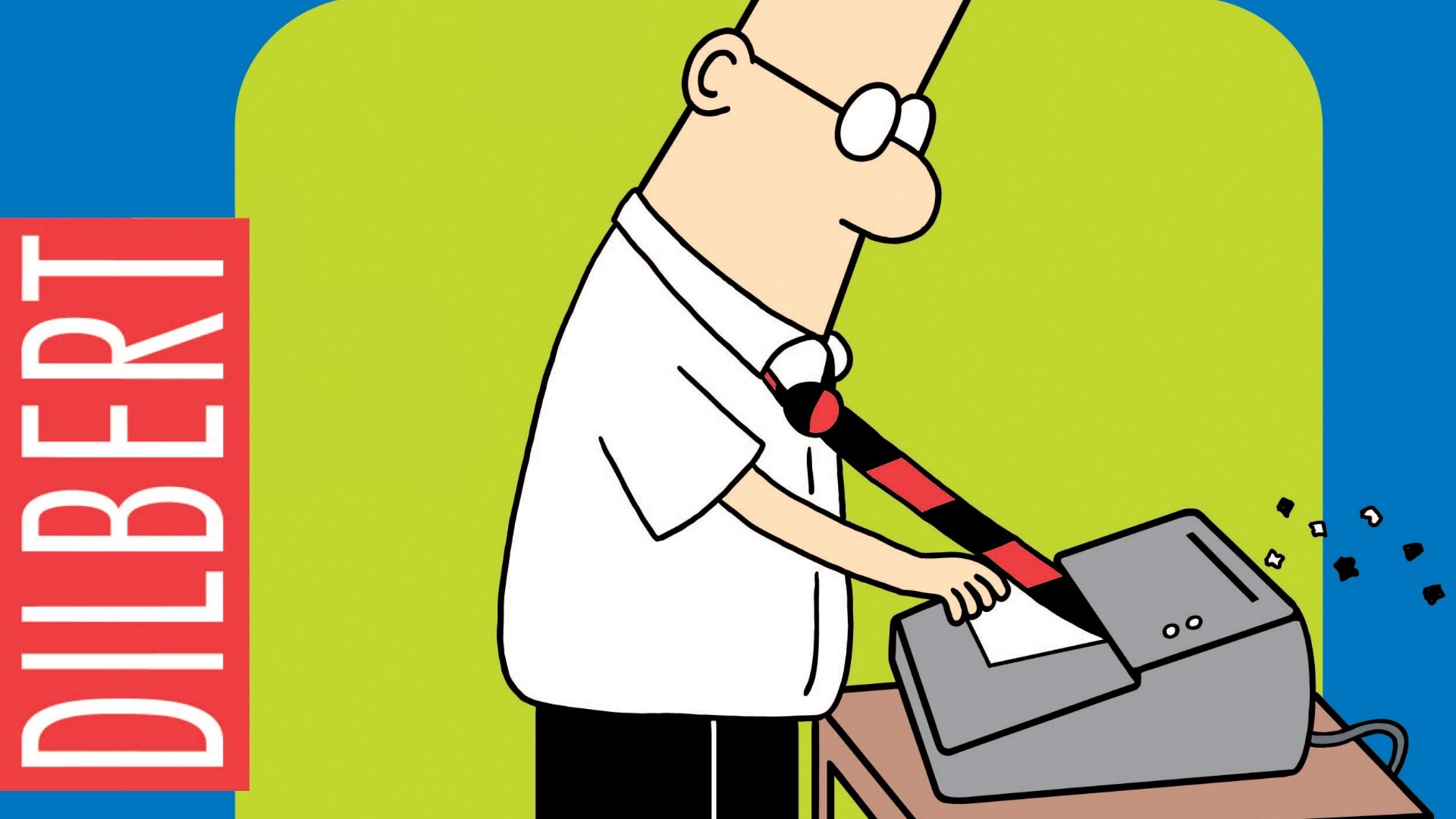
Scott Adams popularized the idea of a Talent Stack. For Adams and his Dilbert Comics, he uses a handful of slightly above-average talents. Drawing, business, writing, and humor.
The intersection of multiple good ideas might be a great idea.
His time working in an office is seemingly unrelated to making comics, but it’s the part of his talent stack that makes his work so relatable.
Rodney Dangerfield realized the same thing. He’d attempted to become a stand-up comic, but couldn’t hack it. Should he change his act to strike a chord with audiences? Borrow from other headliners of the day? No, this talent stacking isn’t about being inauthentic—it’s about finding your missing ingredients.
Dangerfield left comedy and started selling vinyl siding to pay the bills. He didn’t know it then, but those experiences on job sites, yucking it up with all walks of life, would become the secret sauce his act needed. Sometimes your authentic self needs some refinement, a few more tools in the box.
Was he the best comedian in the world? What about the best vinyl siding salesman? Neither. But that blue-collar backdrop gave him something real to tell his stories against. While he paid those bills and cracked wise on job sites, he started to see his act in a new way. His talent stack wasn’t about perfection in any one area—it was about bringing together real-life experiences that resonated with audiences.
What Dangerfield found naturally through life experience, others have deliberately cultivated.
If you have a background in fighting, a career in comedy, and a deep curiosity that makes for good interviews, you might have the makings of a talent stack that people will enjoy. Joe Rogan pulled together these seemingly disparate skills and became one of the biggest voices in media. He’s not the best interviewer, comedian, or fighter—but the combination, along with his willingness to share on the internet, stumbles and mishaps included, created something unique and powerful. His talent stack allows him to connect with fighters, comedians, scientists, and entrepreneurs in a way that few others can.
Sweet Success
You’ll get farther with good ice cream and good business skills than just great ice cream alone. Ben Cohen and Jerry Greenfield are the perfect example. Were these two classically trained in the ancient arts of frozen cream, studying at the feet of Augustus Jackson, the Father of Ice Cream? Hell no. Jerry had just failed to get into medical school, and Ben couldn’t even taste or smell their concoctions. That sensory limitation actually turned out to be an advantage—it forced him to focus on texture.
Together, they created quite a talent stack: good ice cream making skills, creative flavors and naming, and a genuine commitment to social issues.
None of these talents, on their own, would have been enough. But the combination beats even the best ice cream makers in the world. Ben & Jerry created a cultural phenomenon because of their talent stack, taking the best ideas they found and combining them. They even made this philosophy literal—their “Everything But The…” flavor throws together vanilla ice cream, chocolate-covered toffee pieces, white chocolate chunks, peanut butter cups, and chocolate-covered almonds. Like their business itself, it’s not about having the world’s best toffee or the finest chocolate—it’s about bringing good things together in a way that creates something better than the sum of its parts.

Building Your Stack
Want to build your own talent stack? Start by looking for skills that synergize, that multiply. Instead of a linear addition of skills, for example, a carpenter learning to paint, look for nonlinear gains. A good carpenter who, like, just calls people back. Seriously, all they’ve got to do is call me back!
How about this one:
A good writer who understands SEO will reach more readers than an amazing writer whose work goes unseen. Look for skills that are complementary.
As a little league dad, I can learn more drills to run the kids through at practice, but if I don’t solve for trust and fear of failure, we’ll never get the best out of the team.
Like the early MMA fighters, you might be mastering a single discipline right now. And there is nothing wrong with that. But your breakthrough will likely come when you add some complementary skills to that mastery. Look around. What can you add to your arsenal that is both enjoyable and helpful in amplifying your abilities?
If you enjoyed this post, please share it with a friend.





What do you think?