I’m always hunting for a new story.
Something novel and important. Some fresh characters or perspectives that will help connect important ideas. That search involves books, podcasts, YouTube, and of course, other blogs.
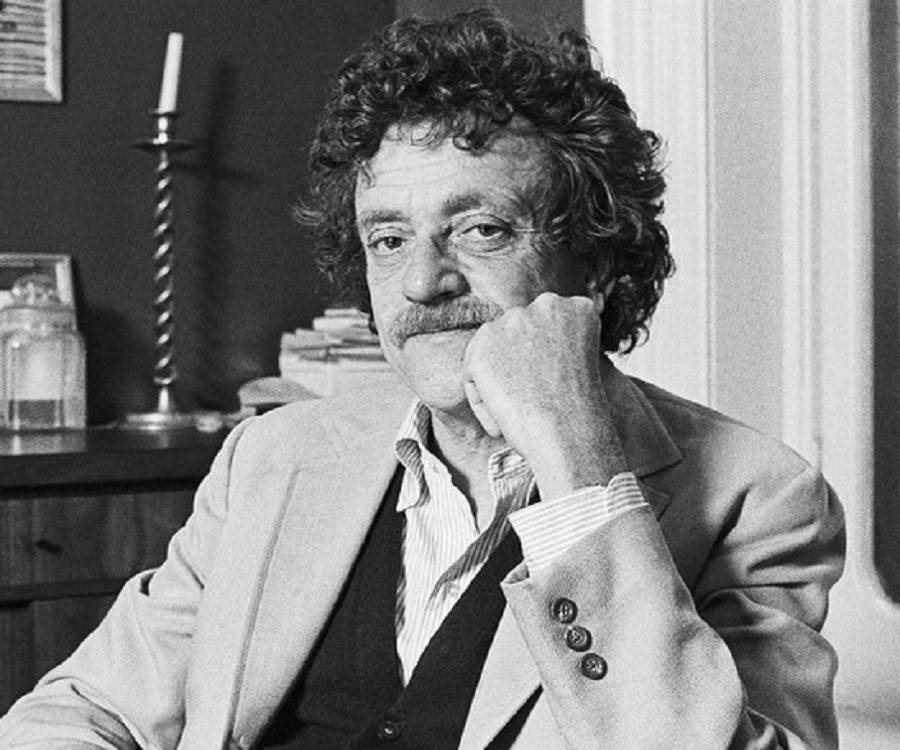
One of my favorite stories involves a fancy party on Shelter Island, just outside of New York City. The party was thrown by a billionaire, and writers Kurt Vonnegut and Joseph Heller were in attendance.
This was many years ago and at one point, Kurt looked over at his friend to give him a hard time. “Joe,” he said, “how does it make you feel to know that our host only yesterday may have made more money than your novel ‘Catch-22’ has earned in its entire history?”
Heller contemplated the comment for a moment and then said, “I’ve got something he can never have.”
Surprised, Vonnegut asked, “What on earth could that be?”
Heller looked Vonnegut straight in the eyes and said, “The knowledge that I’ve got enough.”
This is, of course, my telling of the story.
Others told the story first:
Vonnegut himself told the story as a poem he wrote for the New Yorker in May of 2005.
JOE HELLER
Kurt VonnegutTrue story, Word of Honor:
Joseph Heller, an important and funny writer
now dead,
and I were at a party given by a billionaire
on Shelter Island.
I said, “Joe, how does it make you feel
to know that our host only yesterday
may have made more money
than your novel ‘Catch-22’
has earned in its entire history?”
And Joe said, “I’ve got something he can never
have.”
And I said, “What on earth could that be, Joe?”
And Joe said, “The knowledge that I’ve got
enough.”
Not bad! Rest in peace!
I first came across the story while reading Stillness Is the Key, the third installment in Ryan Holiday‘s trilogy on stoicism. Here is Holiday’s telling of the scene.
The writers Kurt Vonnegut, the author of Slaughterhouse Five, and Joseph Heller, the author of Catch-22, were once at a party in a fancy neighborhood outside New York City. Standing in the palatial second home of some boring billionaire, Vonnegut began to needle his friend. “Joe,” he said, “how does it feel that our host only yesterday may have made more money than your novel has earned in its entire history?” “I’ve got something he can never have,” Heller replied. “And what on earth could that be?” Vonnegut asked. “The knowledge that I’ve got enough.”
Ryan Holiday, Stillness Is the Key
I ran across it again while reading an investing book, The Motley Fool Investment Guide. Here is that telling from the Gardner brothers.
Author Kurt Vonnegut reportedly said to fellow novelist Joseph Heller while attending a billionaire’s party, “Joe, how does it make you feel to know that our host only yesterday may have made more money than your novel, Catch-22, has earned in its entire history?” Heller replied, “I’ve got something he can never have . . . The knowledge that I’ve got enough.”
Tom Gardner and David Gardner, The Motley Fool Investment Guide
Again, I read an abridged version of the story in an entrepreneurial book from Derek Sivers.
Kurt Vonnegut and Joseph Heller were at a party at a billionaire’s extravagant estate. Kurt said, “Wow! Look at this place! This guy has everything!” Joseph said, “Yes, but I have something he’ll never have. . . . Enough.”
Derek Sivers, Anything You Want: 40 Lessons for a New Kind of Entrepreneur
And in the world of personal finance, Morgan Housel has his rendition in The Psychology of Money.
At a party given by a billionaire on Shelter Island, Kurt Vonnegut informs his pal, Joseph Heller, that their host, a hedge fund manager, had made more money in a single day than Heller had earned from his wildly popular novel Catch-22 over its whole history. Heller responds, “Yes, but I have something he will never have … enough.”
Morgan Housel, The Psychology of Money
I assure you this list goes on, but I think you understand my point. Something else you should understand, I like the story so much that I highlight it every time I read it. I have this same story, revised and retold, eight times in my Kindle highlights.
It’s short, memorable, novel, and important. It has a great lesson that doubles as its surprise ending. It’s a ten out of ten.
And as you may have noticed from the different books above, a good story like this can be inserted into various subjects. From stoicism to entrepreneurship to personal finance. It’s universal.
The equation:
Derek Thompson has a simple equation for what makes a story interesting. He says it’s the sum of novelty + importance. He says, “Many stories are novel, but not important. Sometimes great efforts at writing and reporting don’t attract an audience because the story fails to answer the silent question inside every reader’s head: “Why should I care?” Other stories are important but not novel. If you have nothing new to add to a topic in reporting or sources or interpretation or framing, move on.”
My first reading of Thompson’s equation, novelty + importance = interesting, didn’t jive with the repeated use of “enough” as well as other classic stories. People are still telling The Boy Who Cried Wolf, and The Three Little Pigs. Half the movies that come out follow The Hero’s Journey. Nothing new there. Our Hero will return home, changed. And we’ll be there to watch.
But Thompson strays from the dictionary definition of novel when he says you need something “new to add to a topic in reporting or sources or interpretation or framing.”
In the writing business, this is what we call slant. And when telling a story, it’s perfectly acceptable to have your own slant. If it’s a novel slant, a new interpretation, a new framing, it can hit the mark.
Bill Bryson has published books about the Appalachian Trail, Science, and his latest work is essentially a textbook on human anatomy. All these topics have been thoroughly covered, the story has been told, but not with Bryson’s slant.
Your high school coach tells the team about his old championship squad in the 80s and depending on the day that slant might be about work ethic, passion, love, brotherhood, or competition.
That is what’s going on with the widely used “enough,” and that’s why it works.
I’m a bit slow on the uptake, it took me eight books and a few online articles to put this together but here is my slant.
A wonderful story can be told repeatedly. The search for novelty isn’t always a race to tell the first rendition of events, sometimes it’s about seeing new perspectives and connections that are sitting there in plain sight, with the familiar stories that we already know and love.








What do you think?