Listen to this post: Apple Podcasts | Spotify | YouTube
I first encountered this story in Barnett Helzberg Jr.’s book What I Learned Before I Sold to Warren Buffett.
Helzberg built a jewelry empire before selling it to Berkshire Hathaway—and he made sure every person at Helzberg knew The Jack Story and what it meant.

The Walk: How a Story Takes Shape
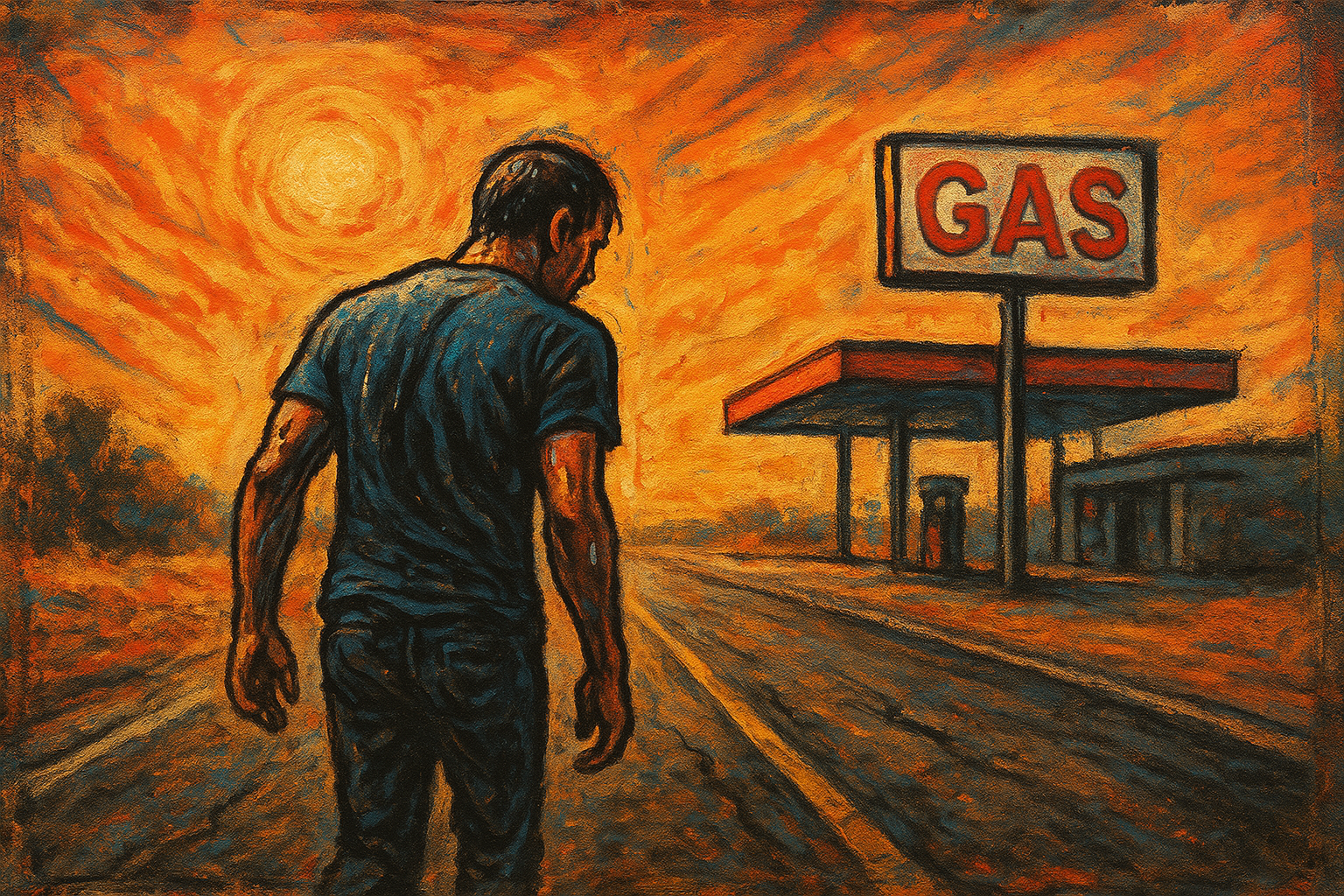
“A man was driving down the highway on a sweltering summer day when one of the tires on his car suddenly blew out. Stopping to search his trunk, he was relieved to find a spare tire—but frustrated that he didn’t find a jack. So he started hiking to the nearest gas station, more than a mile back down the road.
As he walked along, drenched in sweat, he began to think perhaps the station attendant might not want to lend him a jack. After all, he already had a spare tire, and he wasn’t planning to have the flat repaired right away. The station attendant really didn’t have anything to gain by helping him.
The farther the man walked, the hotter and angrier he became, directing all his discomfort at the station attendant—who he was now convinced would surely refuse to lend him a jack.
By the time he got to the gas station, the man was so steamed about the attendant refusing to lend him a jack on this miserable, hot day that he grabbed the startled attendant by his shoulders and demanded:
‘Why won’t you lend me that jack?’”
The Rehearsal: Arguing With Someone Who Isn’t There
On that walk, the man is essentially having a conversation with a ghost—creating an entire relationship with someone he’s never met, complete with assumptions about their character and likely responses.
But it’s worse than just imagining a bad outcome once. He’s ruminating, cycling through the same negative thoughts repeatedly, each time making them more vivid and emotionally convincing.
Why would they help me? I’m not buying anything.
They probably think I’m trying to take advantage.
They’ve probably had people like me before…
With each step in the heat, the mental loop intensifies. By the time he arrives, he’s not just worried about being turned down—he’s certain of it. He’s already experienced that rejection dozens of times during the walk.
The anger isn’t really about the attendant. It’s an expression of vulnerability—needing help, which is uncomfortable. The walk becomes a rehearsal for disappointment, a way of protecting himself from rejection by expecting it.
Before You Solve the Problem, Understand the Person
What have they been through on the way to your door—fact or fiction?
That gas station attendant wasn’t just dealing with someone who needed a jack. He was facing someone who had walked a mile in the heat, imagining the worst-case scenario.
Every customer, every client, every person who walks into your business has taken some version of that walk. They arrive carrying invisible baggage: past disappointments, current pressures, fears of being dismissed or taken advantage of.
Many have been mistreated before and now expect mediocre—or terrible—service. Some feel awkward asking for help. Others are so certain their needs will be ignored that they arrive defensive, even combative.
The Instinct vs. the Opportunity
The instinct for most businesses is to jump straight to solving the problem.
Get them the jack.
Call the tow truck.
Move on to the next customer—as fast as possible.
But hostage negotiators know something most businesses forget: people need to feel heard before they can hear solutions.
In the classic film Speed, Keanu Reeves’ character starts with a familiar problem-solving approach: “Shoot the hostage.” All action, no understanding—and it fails. It’s only when he slows down, listens, and tries to understand the bomber—a man who felt invisible and dismissed—that a path forward appears.

Psychologists call this felt sense: the experience of being acknowledged, of having your reality validated. Until someone feels that, their defenses stay up—and even the perfect solution bounces right off.
This is the opportunity.
When you recognize that someone’s intensity or defensiveness may have nothing to do with you—and everything to do with their journey to your door—you can respond with understanding instead of matching that energy.
You stop reacting to the surface demand and start addressing the human experience underneath.
Building a Reputation for Understanding
You build it by recognizing the person behind the problem.
A customer who feels truly understood—rather than merely served—doesn’t just leave satisfied. They become loyal. They become advocates. They remember how you made them feel when they were at their most frustrated.
The man with the flat tire needed a jack, yes. But before that, he needed to get past his fear and frustration. He needed someone who understood the walk.
In business, as in life, the deeper need is almost always the same:
To be understood.
If you enjoyed this post, please share it with a friend.







What do you think?