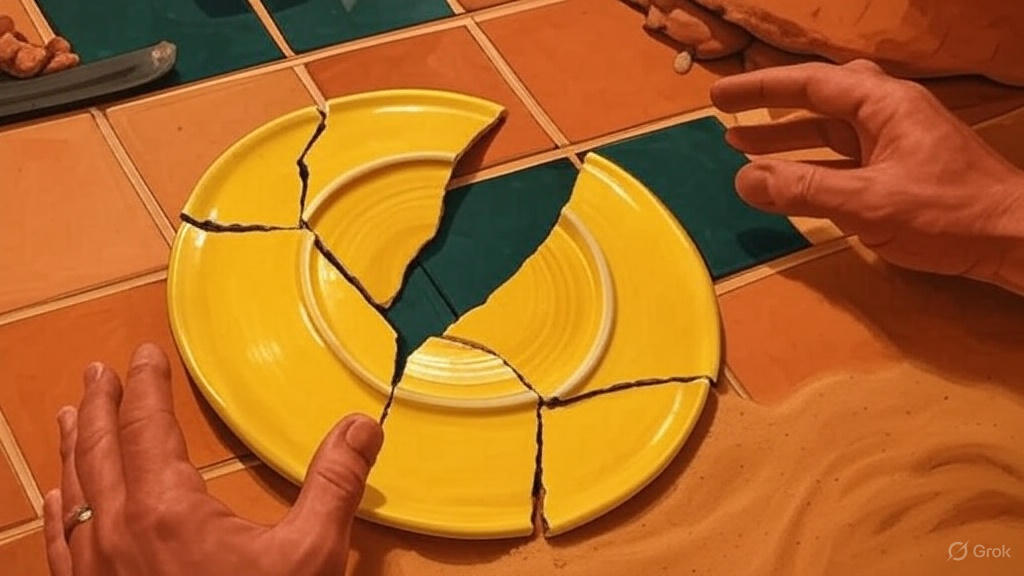
“Communication breakdown, it’s always the same
Havin’ a nervous breakdown, a-drive me insane, yeah”
Led Zeppelin
Communication is the key to outcomes. Friends, family, customers, community. Good and bad outcomes stem from good and bad communication.
Adaptation and customization is required.
You don’t read a manual to learn to ride a bike. You don’t act out the schematics of a microprocessor like some elaborate game of charades. You select the best communication medium for the audience and the information.
How does that medium of communication change based on the group dynamics?
First, a few ground rules.
Handshake overhead is what’s required from groups of various sizes to make introductions. The math looks like this; n*(n – 1)/2.
n = 1: 0 handshakes
n = 3: 3 handshakes
n = 10: 45 handshakes
The numbers increase and become unrealistic very quickly. And that’s just handshakes. Introductions. Imagine doing some actual work or asking about the weather.
To manage actual productivity, we need to look at Mikitani’s Rule of 3 and 10 which states when the company grows from 1 to 3 employees, “everything breaks,” it’s a completely different company. One person requires 0 handshakes, zero communication. At three, we have three handshakes and a complete change in how the company moves through the world. When the company grows from 3 to 10 employees, it changes again; we now have 45 handshakes. Process, procedures, communication, roles, responsibilities, you have them now, and everything needs to be assessed.
10 to 30 employees, it changes again. Leadership, documentation, payroll, training & development.
30 to 100 employees, it changes again.
100 to 300, again, and so on.
What was once handled solo turned into a call, turned into a group email, turned into a Teams channel, turned into SharePoint site.
These ground rules should brace you for impact. The impact of scaling your team. Keep your eye on handshake overhead and the Rule of 3 and 10, they will help you see around corners, help you see communication breakdowns before they happen.
Methods matter.
Don’t send me an email if you need milk at the store.
Don’t send me your startup pitch via text.
The trouble with overcommunication.
Often times we don’t see how our scale is disrupting our communication. We don’t look at the tools or tactics, instead we are told to “over communicate,” using the same process and technology, just crank it up to 11.

Over communication. Lots of emails. Lots of LONG emails. Calls with no agenda. Meandering monologues with unnecessary details and confusing tangents.
Ever look for a cake recipe online and the blogger makes you read 1000 words about how they trekked the Amazon to find the perfect coco powder? That is over communication. And it’s poor communication. The signal is not making it through the noise. People click wanting instructions not narrative nonfiction. Ikea instructions don’t require that you understand how they sourced the raw materials or provide logistics information on how that dresser made its way from Sweden to Renton.
Sometimes what you need to communicate is a simple yes or a no, and the backstory is not as helpful to the audience as you might think. Sometimes, all we need is the recipe, one cup of flour, one cup of milk, 3 eggs, pinch of salt.
The unintended consequence of overcommunication is miscommunication.
Just like archery.
You overshoot and the arrow flies past the target. Hits an innocent bystander in the jugular.
You under shoot and the arrow falls to the ground, stuck in the mud, well short of your target.
Communication is delivering the message to our audience in a way that is helpful. It’s the arrow hitting the target.
You’ve got that, or you’ve missed the mark. Miscommunication.
The answer is not MORE, the answer is BETTER.
How do we communicate better?
Our company President just launched monthly update videos to all employees. Not another synchronous all hands call, an asynchronous self-service videos series. New method. New platform. Why? He realized that the way we’ve always done it was not landing anymore, so he is making a change.
“The true test for whether plans and orders have been communicated effectively is this: The team gets it.”
Jocko Willink
A few more examples.
Planes don’t often go down because of mechanical issues. It’s almost always pilot error. And buried in that pilot error is miscommunication. The pilot, copilots, and air traffic control are not hearing each other clearly. Not working as a team. Sully told the tower three times he was going into the Hudson River. Finally, air traffic control from a different airport had to chime in with “I think he said he was going into the Hudson.”
Or how about Malcolm Gladwell describing the 1997 crash of Korean Air Flight 801 in his book Outliers. Poor communication between captain and first captain was the underlying issue.
Marriages don’t often fail because the partners got up one morning and decided to hate each other. And most of the time they are not bad people. Marriages fail because those people stop communicating. Stop listening, stop sharing.
Some communications Best Practices.
Ever see a good kitchen operate? Yes chef, no chef, corner, pick it up!
Ever see special operations? Constant chatter from the front lines, every move telegraphed, detailed mission planning, post mission debrief. And what is the first thing they do to their enemy? Cut their communications.
Open, flowing, proactive, and multidirectional. This is how your communication should feel.
Does it?
It’s a practice. It’s a process. It’s infinite. No winners and no losers with communication, like a game of catch, the idea is for them to catch it and toss it back.
It happens in different modes. Synchronous and asynchronous.
It needs to be timely, needs to be regular, like checking in on the kids.
It needs to be inclusive, that means you don’t text on the side, you don’t IM half the team talking shit about the others. Have conversations in public for all to hear and learn and contribute.
What to do as the handshakes grow.
Improved processes, procedures, and tools might be needed to keep pace.
Rambo didn’t need radio contact.

Seal Team 6 did.

Modern tools for modern work.
I don’t want to see that pink missed call slip on my chair when I get back to the office.
We’ve grown past that. We think the modern tools were built for remote work, but the truth is, office or not, the tools are for going big. They are for distributed teams, office, car, client sites, doctors’ office, or the moon. Offices are open but we’ll still have the same challenges. As the team grows, the number of handshakes grows, and we need tools that scale with us.
Do your future self a favor.
We don’t want a call in the dead of night but sometimes we set the team up to do just that. We insert ourselves into every workflow to feel useful. This is a super uncool trait. The goal is to remove any single person as a bottleneck in any process. And we can do it if we communicate. Can it easily be understood in writing or video? Do that. Now you can go on vacation. Use machines to replicate yourself and keep things moving 24x7x365.
Take notes on repeatable issues, adding them to a shared document or the team wiki, and then make sure people know where to search. It’s like communicating from the grave. Now go enjoy your backpacking trip.
Record meetings that could be useful to others on the team that are absent or busy or joining in the future. The team will think you are telepathic. And off you’ll go to your daughter’s dance recital.
Or use all of this saved time and improved performance to do more.
What you are trying to do is communicate and simultaneously create a project archive that can be used by others on demand. Anything less than that is self-sabotage.
Is it working?
The call right after the meeting. The text during the meeting. These are signs that people are not being open, not having public conversations, and the environment is not one of collaborative communication.
The meeting gets canceled when you are out of town. A sure sign that the team is not getting as much out of your time together as you think. If it was truly useful and collaborative, they’d continue on without you. Does dinner happen when you are out of town? Yeah, make it essential like that.
The question on things “we just covered,” the email for details that are easily searchable, information at their fingertips. These are signs that communication flows are not widely understood. Different groups are doing it in different ways. The information is confusing.
Something needs to change.
Our goal is ONE TEAM, not a group of loosely organized individuals. Not a group of people waiting to be told what to do.
When it’s one team and we are all on the same page, outcomes improve. Experiences improve. And we avoid the dreaded communication breakdown.