Listen to this post: Apple Podcasts | Spotify | YouTube
Most colleges send glossy brochures filled with manicured lawns, multicultural study groups, and inspiring slogans. Excellence. Transformation. Memories. They promise small classes, distinguished faculty, and life-changing experiences—a polished, idyllic college fantasy.
But all that marketing tends to blend together.
Then there’s the one envelope in the pile that didn’t.
“Harvard Med?”
“No, Harvey Mudd.”
That’s a conversation you can expect if you do well enough on your PSATs. High school juniors know the drill: strong scores mean a mailbox overflowing with brochures. Most are forgettable, but Harvey Mudd College—a small science and engineering school near Los Angeles—found a way to stand out.
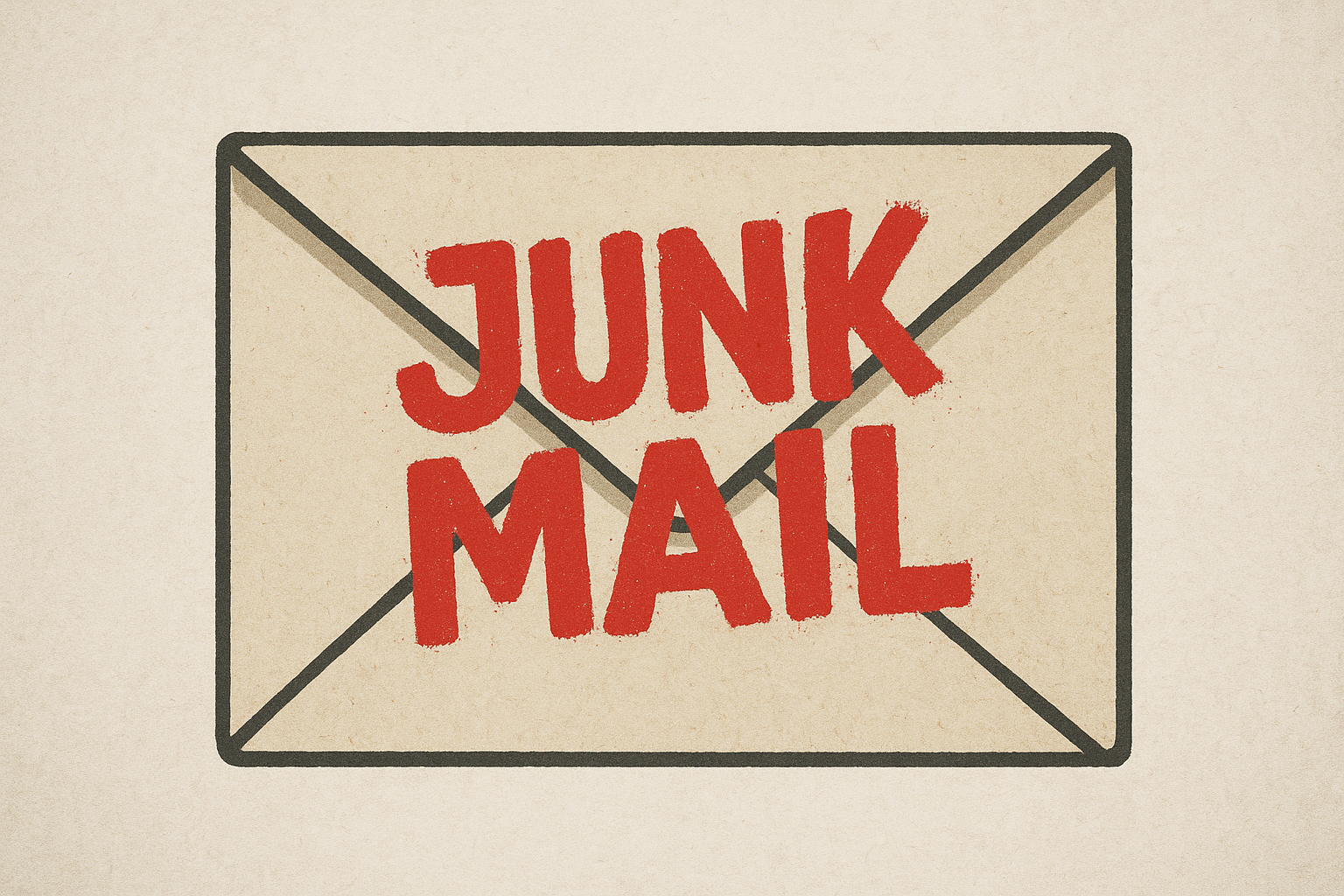
If you’re talented enough to be recruited by Harvey Mudd, their mailer might catch your eye in a sea of college logos and crests. It will be the colorful envelope with “JUNK MAIL” splashed across the top. The school with the funny name discovered that academic excellence alone isn’t enough, so they led with a sense of humor, a bit of whimsy, and some serious huevos. They owned the moment. Yes, this is junk mail. And by saying so, they showed empathy—they understood the absurdity of the college recruitment flood.

That kind of candid acknowledgment disarms skepticism. It invites students to trust a college that doesn’t hide its place in the pile. The brochure speaks directly to the 17-year-old sorting through the stack.
“For all of you who are fed up with dull, repetitive, pedestrian college brochures, pamphlets, posters, and broadsides,” they offer the “Harvey Mudd College Junk Mail Premium Kit!” Harvey Mudd signals empathy: We get it. This is junk mail, too.
“We know you’re drowning in college junk mail,” it concedes, before explaining why Harvey Mudd—quirky name and all—is a school worth considering. That kind of honesty works because acknowledging the obvious reduces skepticism.
Students enjoy small classes, free from massive lecture halls or graduate teaching assistants. The pamphlet humorously acknowledges what they’re not: “We don’t play Notre Dame or UCLA on prime-time television. No Rose Bowl, no NCAA probation, and no steroid scandals!”
Launched in the 1980s under former Dean of Admission Duncan Murdoch, the campaign has had enduring impact. “It was so different from the stuffy Ivy League brochures,” said Marjorie Solomon, a junior math major from Richmond, Virginia. “They [the Ivy League] seemed to say, ‘You’re not quite good enough, but maybe we’ll take you.’ Harvey Mudd felt honest.”
The school doesn’t just promote its academic excellence—it owns its uniqueness. As Harvey Mudd President D. Kenneth Baker put it, the college is “a well-kept secret,” and being first in the nation for graduates earning doctorates is “a ranking that really means something.” Embracing what makes them different resonates with prospective students looking for authenticity.
The connection alumni have to this campaign speaks volumes about its effectiveness. You’ll find graduates who proudly proclaim, “I still have my ‘Junk Mail’ decades later.” The campaign created lifelong ambassadors, not just applicants—people who remember the moment they first connected with the college’s honesty.
Harvey Mudd understood they could joke about being “junk mail” because underneath the humor was genuine academic excellence. The self-deprecation worked because there was substance to back it up. Other colleges couldn’t take that risk because most of them are fairly interchangeable: good but not exceptional, nice campus but nothing unique. They need the glossy photos and vague promises because they don’t have something distinctive to be honest about.
When someone is willing to be radically transparent, you instinctively understand they have nothing to hide. The willingness itself becomes a proxy for quality and builds trust. Harvey Mudd’s “JUNK MAIL” envelope was actually a flex—a signal that said, “We’re so good we don’t need to pretend.”
Why is this approach so rare if it works so well? Because genuine transparency requires real credentials. Most institutions are selling something closer to mediocrity, so deception isn’t just a choice—it’s a necessity to cover gaps in actual value. The polished marketing is compensation.
In the 1960s, Avis was the second-largest car rental company behind Hertz. They launched the famous “We’re #2, so we try harder” campaign—turning their market position into proof of effort and care.

Domino’s Pizza did something similar decades later. In 2009, they admitted, “Our pizza sucked.” Morning shows did taste tests, and customers started ordering again. But they didn’t stop there—they reworked the recipe and promised that all future marketing would reflect the actual product, rather than stylized “cheese porn” photos. By pairing radical honesty with genuine improvement, Domino’s regained customer trust and achieved massive sales growth.

Newcastle Brown Ale, unable to afford Super Bowl advertising, ran campaigns mocking the ads they couldn’t afford—turning a budget constraint into authenticity. Different industries, different decades, different weaknesses—but the same principle: transparency works when you have something real to be transparent about.
Owning potential negatives—like being smaller, less known, or not having big-time sports—transforms them from weaknesses into strengths. In the crowded field of college recruitment, where most institutions rely on glossy images of students lounging on manicured quads, Harvey Mudd’s self-aware humor and unapologetic authenticity prove that owning the truth, even when it’s unconventional, is the fastest way to win trust.
The college maintains this philosophy today. “We still believe that combining creativity with humor and facts is the most effective strategy for attracting new Mudders.” By blending humor with honesty, Harvey Mudd doesn’t just attract students. It earns their trust from the very first envelope.
In a world conditioned to distrust marketing, admitting what everyone already knows becomes a competitive advantage—if you can back it up.
If you enjoyed this post, please share it with a friend.







What do you think?