This is part three of my series on compounding interests.
If you missed the earlier posts, give them a read. People like them.
Part 1: compounding interests, or how to become a genius in just under a lifetime
Part 2: compounding interests part two, the penniless genius
Compounding has principles, but no recipe.
After reading parts one and two you may have realized that I fudged the numbers a bit.
I glossed over a few things. I don’t really like rules. I don’t like compliance. And here’s the deal, compounding interests, becoming a genius, it’s not something with a specific recipe. No manual exists.
Some guru did not advise Steve Jobs to audit Professor Robert Palladino’s calligraphy class at Reed College. No experts told Jobs that the class would have a profound impact on his design aesthetics and support his yet unknown desire to change personal computing. Steve said, “It was beautiful, historical, artistically subtle in a way that science can’t capture, and I found it fascinating. None of this had even a hope of any practical application in my life. But ten years later, when we were designing the first Macintosh computer, it all came back to me. And we designed it all into the Mac.”
You got me? He was seventeen and following his interests. To most humans, that class was a chance to take a cat nap. Steve found it fascinating.
So, while there are no firm rules, and no recipe, we do have a few basic principles.
In part one, we discussed the importance of finding that thing you love, the thing you think about, obsess about, and then holding on to that thing for dear life.
Find that thing early and never let go.
Bill Gates told Charlie Rose, “The thing you do obsessively between age 13 and 18, that’s the thing you have the most chance of being world-class at.”
Interest creates focus creates mastery creates genius.
In part two, we discussed timing. Not all geniuses are commercial successes, and the outcome of your work depends on your interests and the interests of your time. When those two are in sync, checks are cashed. If not, you become the penniless genius, like van Gogh. Excellent, just no yacht.
But this is part three, and I want to highlight a critical aspect of compounding interests.
The first rule and the long hill.
I briefly mentioned the first rule in part one. From the late, great, Charlie Munger. “The first rule of compounding is to never interrupt it unnecessarily.”
The benefits of compounding increase over time, as long as you don’t muck it up. Each year, the compounding makes a larger impact.
Here is an example with money, but it holds true elsewhere.

It is why Warren was worth $4 billion when he was 60 and is worth $121 billion at 93.
82 years of compounding his money and knowledge means he has a lot of surface area for snow to stick.

Compounding is very different than the linear growth we often ascribe to successful ventures. Linear growth would see $4 billion at the age of 60 and think that Warren was adding $1 billion every 15 years like clockwork. If that were the case, Warren would be looking at $6 billion when he blew out the candles on his 90th birthday.
No offense to any poor bastards with a few billion in the bank but Warren would choke on that cake if he woke up with just $6 billion in the coffers.
Warren adds to Charlie’s wisdom, saying “Life is like a snowball. The important thing is finding wet snow and a really long hill.”
Wet snow, meaning the conditions for success. As we discussed in part one, Warren was interested in financial markets, was a white male in the United States, and his father worked as a broker. That is some wet snow.
A long hill, meaning an interest that can be compounded for life. Things like film, music, the arts, and finance. You won’t find many “genius” stunt doubles around, and you’ll find even fewer “genius” boxers.
The hill is too short.
Tom Brady is the GOAT.
Bill Belichick, who started breaking down film for his father at the age of 9, is thought of as a football genius. He is finally reaching the bottom, but was on the hill for 62 years.
For my Bay Area family, the same can be said for Joe Montana and Bill Walsh.
Find that wet snow, find that long hill, and do whatever you can to stay on your skis.

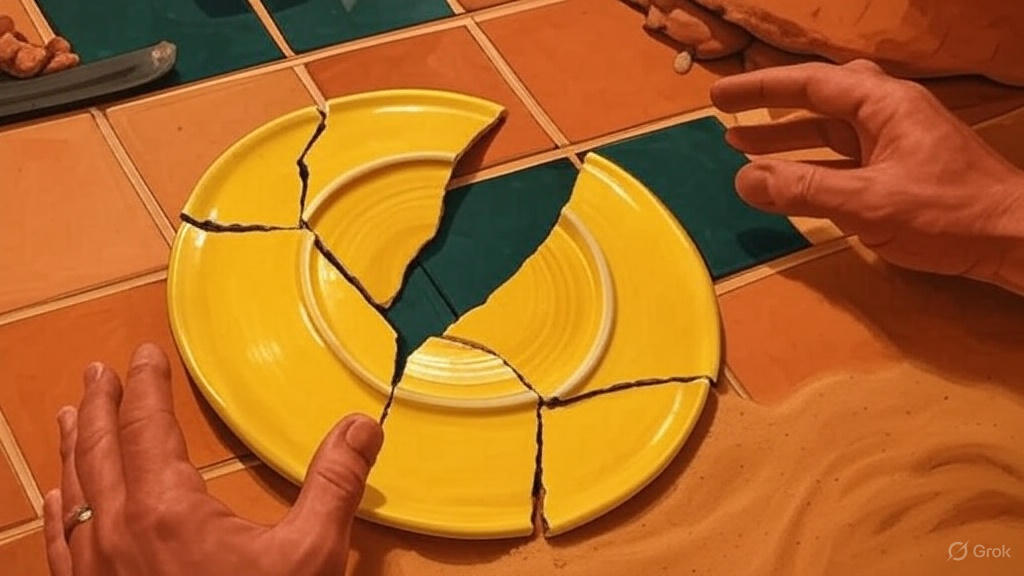
Vincent van Gogh was born too early and died too young. He could have been bigger in his time. He could have sold a few more paintings if only he had had that lucky combination of compounding interests and time.
To steal from the world of finance, “It’s not about timing the market, it’s about time in the market.” In other words, you can’t catch fish if you don’t have your line in the water.
Well, many of you know that Vincent van Gogh killed himself. His lack of success commercially, financially, it crushed him. He suffered from depression and could not see how big that snowball was going to get.
He could have continued on for another 10-20 years and likely would have seen some commercial success at that point, he could have kept cranking out work and kept compounding.
I wish that was the case. The world needs more art.
Van Gogh broke the first rule of compounding. He did it twice actually. Once when he went to work with his brother selling art, and again when he killed himself.
He interupted the compounding unnecessarily.
Never interupt compounding uncessarily.
Most of the time we will interrupt ourselves. We call that thing we love a hobby and set it aside. We’ll start compounding other random stuff that we think will pay the mortgage. Vincent did that exact thing when he worked for ten years as an art dealer. He lost half of his working life schlepping other people’s art.
Once committed, his pace of production and innovation was unmatched, but he had already lost a decade of compounding.
You need to be lucky enough to find that thing you are obsessed with. Even luckier to find it when you are young.
But you need to be smart, dedicated, and stubborn to stick with it, letting it compound uninterrupted.
Spielberg did it. That’s why he can quickly adjust a scene with bad lighting into a totally new concept over the course of a quick walk.
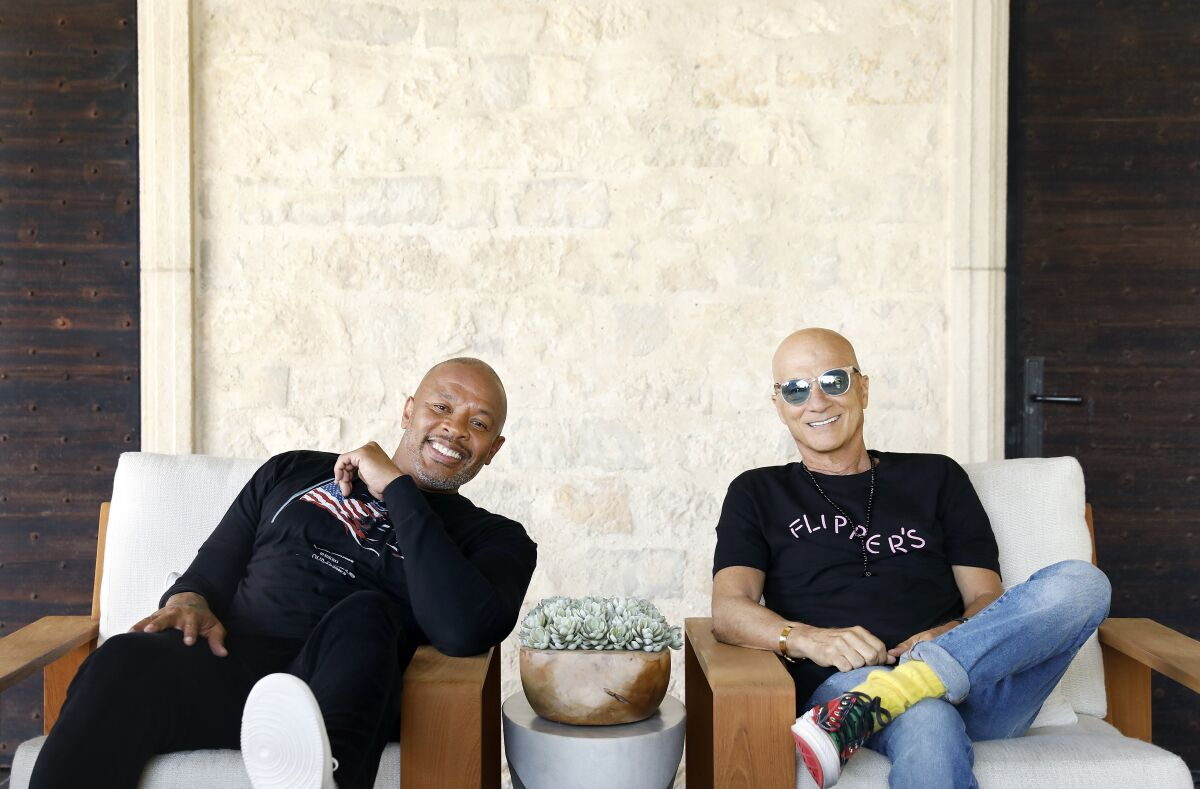
Dre did it. That’s why he can get in the studio with Eminem, hear just a few bars and say, “Stop. Shit is hot,” and immediately push record on My Name Is.

Once you identify that thing you are interested in, you stick with it, you don’t get talked out of it.
Interest creates focus creates mastery creates genius.
You can start late and still make one heck of a run at compounding those interests. You’ll need to work diligently and live long enough.
Life is long.
Steven Pressfield is doing his best to prove me right. If nothing else, Pressfield’s gift to the world has been the identification of what he calls “Resistance,” the part of your brain that convinces you that genius is unattainable, so why bother trying? Pressfield avoided compounding with stents as a truck driver and a fruit picker in between gigs as a copywriter, an ad man, and a screenwriter. Finally, at 40, he published his first novel. At 80, he is still writing. He may never reach the heights of Stephen King, who started selling novellas in grade school, but he is on the path, without interruption, and I’m excited to see what he creates next.
The only thing I knew him as was an artist.
After serving in World War II, my grandfather served Kaiser Industries for 40 years. Automobile division in Detroit, Metal Products in Bristol, Aerospace and Electronics in Oakland, and then the Kaiser co-owned, National Steel and Shipbuilding Company (NASSCO), in San Diego. Vice President of Industrial and Labor Relations when it was all said and done. 40 years of compounding will get you that title and a nice pension.
How did he spend his time in retirement? Was he so enamored with labor relations that he stayed close to it?
Not a chance.
He painted.
He loved oil painting and became an accomplished artist over the next 35 years. The closest he came to ship building was his annual contribution back to NASSCO, painting a ship for them to use on their corporate Christmas cards.

I was four years old when he retired. I don’t remember him working for Kaiser. The only thing I knew him as was an artist. And I think he preferred it that way.
You can get good at almost anything if you are really obsessed. My grandfather became obsessed. He leased an old dentist’s office and turned it into his studio. As he got older, his hands got shaky, and his vision failed him. It was frustrating for him. His body wasn’t letting him compound anymore. The hill had flattened out.
I’ll always remember sorting through that studio after he passed away. Hundreds and hundreds of pieces. And a few of them, to me, were genius. Kaiser paid for many a family trip to Disneyland, to Sea World. It paid for some college too. But I’d trade that for a few more years of him compounding, and a few more paintings to sort through.
No hill is endless. We all end up at the base of the mountain.
You can make the most of it though. You can pack on a lot of snow if you avoid interruptions, and pick a nice long hill with wet snow.
My grandfather painted for longer than van Gogh, but he started farther down on the hill, he didn’t have the same wet snow.
Is genius the goal?
Genius is not guaranteed. It’s not the goal either. If it happens, excellent, but these people didn’t set their sights on it.
When asked about what he does every day, Buffett said, “I’m having a vacation every day. If there was someplace else I wanted to go, I’d go.” He goes to the Berkshire Hathaway offices every day.
Dre said, “I’m never gonna stop music, it’s like air to me.”
And Spielberg said, “Even though I get older, what I do never gets old.” He equates what he does to dreaming, saying “I don’t dream at night, I dream at day, I dream all day; I’m dreaming for a living.”
Van Gogh once said that he wanted to “give happiness by creating beauty.”
He also said, “Blessed is he who has found his work.”
I’d say he checked both of those boxes.
And isn’t that the true mark of a genius?
Compounding interests can take you a long way. But maybe genius is not the outcome of that time on the hill, instead it’s the process, the choice. Allowing yourself to live out your days doing what you love. However long that may be.