Listen to this post: Apple Podcasts | Spotify | YouTube
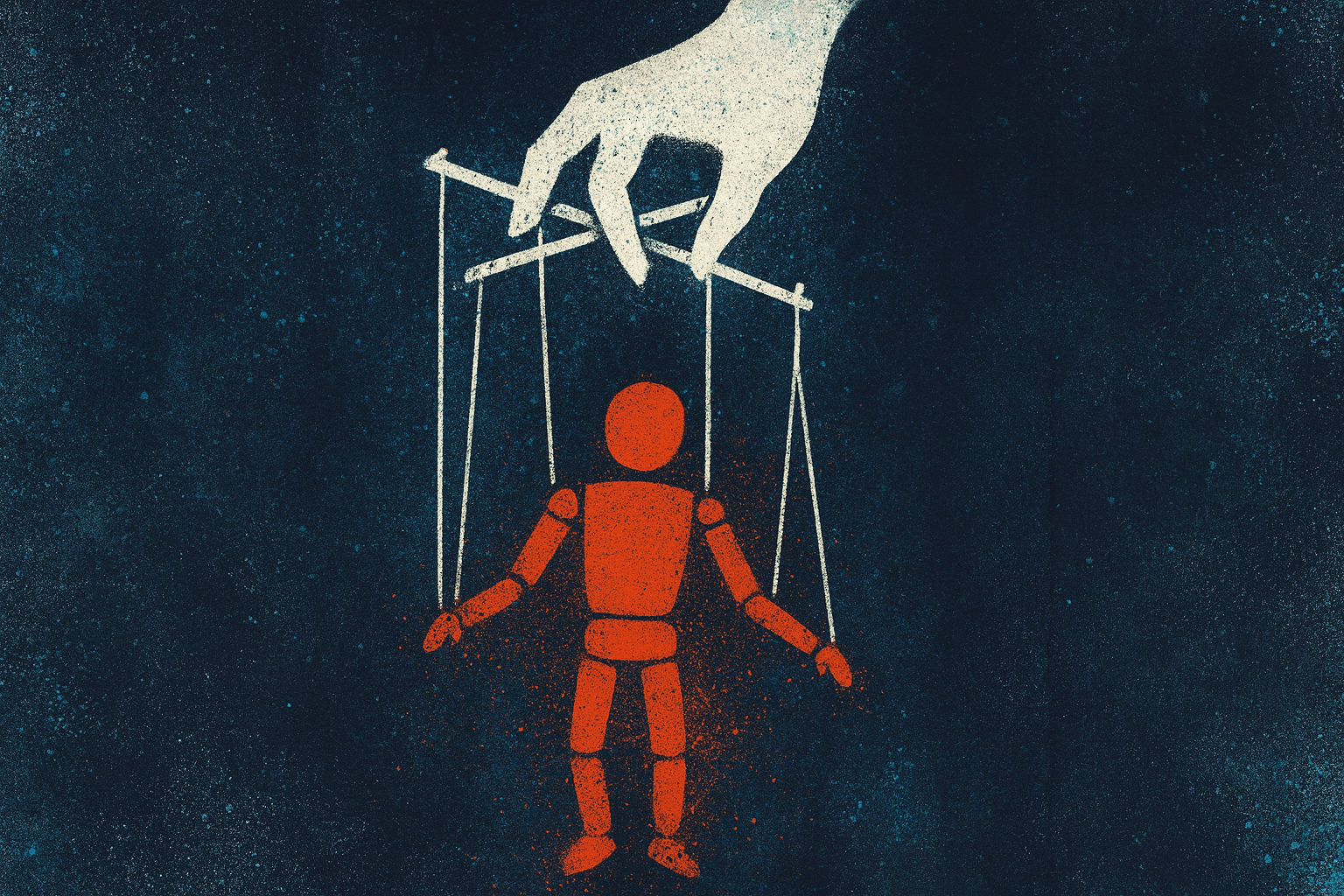
If you can’t walk away, you don’t have a job—a job has you.
Packy McCormick flipped it, saying, “If you pay an employee $270,000, you own the employee. If you pay an employee $2.7 billion, the employee owns you.”
He was referring to the huge sums being offered to top AI talent, and what those pay packages say about who’s wearing the pants in the relationship.
But the thing about getting paid billions, there are typically a few strings attached.

This logic applies even at the tippity-top of the employment ladder. Tesla shareholders recently approved an incentive-laden pay package for CEO Elon Musk—but cashing it in won’t be easy.
Over the next decade, he’ll need to sell 20 million vehicles, operate 1 million robotaxis, and earn $400 billion in core profit. Tesla’s stock value will need to climb from $1.5 trillion to $8.5 trillion. Each milestone earns him 1% of the company. Hit them all, and he gets 12%—about $878 billion.
Why did Musk want a package like this? Because even he isn’t free from the strings of manipulation—he just gets wired up with a bit more gusto.
For the world’s richest man, the money is beside the point. What he actually wants is control.
He wants to make sure he owns the company instead of the company owning him.
Unfortunately for Musk, owning more of Tesla won’t release him. If anything, it’s going to tie him to the mast.
And if Musk can’t leave, keeping you should be no problem at all.
You can’t walk away—not quite yet. Bills to pay. Kids in school.
What will we do about insurance?
But when faced with the idea that your “job has you,” the pushback is nearly instantaneous. People don’t want to believe it. As Sam Harris says, “A puppet is free as long as he loves his strings.”

Do you love yours? It’s easier if you just say yes. Easier for them and for you.
Most don’t even realize they’ve been bound—they’ve learned to love the rope.
The question isn’t whether you have strings; we’ve all got a few. It’s whether you can evaluate who or what is holding them.
Value Elasticity
Value elasticity is the ability to reassess what something is worth when the environment changes around you. The sports car was pretty hot when you first got out of school, but with three kids and a baby on the way, a Suburban might be the more valuable choice.
You see this pattern everywhere—medicine, law, academia. Someone goes in with elastic values: curiosity, purpose, the desire to do meaningful work. Shoot, even the cash can be elastic while it serves you. But ten years later those same values have hardened into debt, identity, reputation, and sunk cost. At that point, reevaluating feels impossible. That’s how fast elasticity becomes rigidity.
Without elasticity, you get stuck on one track with one master. You keep striving for things you valued years ago, letting a younger, less wise version of yourself take the wheel—chasing goals absorbed from parents, teachers, and Little League coaches.
A version of you that didn’t understand the corner office is easily trumped by no office at all.
The currency to keep you?
Money is just the entry point. Status asks who’s up and who’s down. Affiliation asks who’s in and who’s out.
But the trap is always the same—they tie themselves into your identity.
Why Do Billionaires Work?
What would you do if money were no object?
For a billionaire, money is no object. So before we outlaw them, maybe we can check in and see if we can learn anything.
Larry Ellison doesn’t work for money—he’s been a billionaire for decades. He works for something harder to satisfy: ego.
“I don’t give a shit about profits,” he once said. “I want to beat Sybase.”
That was early in Oracle’s history. Sybase is long dead. But the psychology never changed—just the target. For years it’s been Microsoft. “The only software company we worry about, watch, and try to learn from is Microsoft,” he admitted. But he couldn’t leave it there: “They’re the world’s experts [at bundling].”
Translation: They don’t win on technology. They win on deals.
He dismissed their desktop dominance, convinced Oracle owned the server future. Except Microsoft became a cloud company. Now, in his eighties, Ellison is making massive leveraged bets on AI infrastructure and data centers.
Why? Because his coin isn’t cash; it’s proving he’s not second-best.
Look at any billionaire close enough, and you’ll see it—they’ve just traded one leash for another.
Viktor Frankl wrote, “Man is pushed by drives but pulled by values.” Even with all the money and power they could ever imagine, they’re still getting pushed around.
They’ve got all the money in the world and still can’t revalue what matters. That’s value rigidity at its most expensive.
Coin-Operated Culture
My old CEO used to say the sales team was “coin operated.”
He meant that he was coin operated—and he was building the company in his image. Management becomes easy when people are coin operated. Dangle the carrot, the accolades, the incentive trip, and watch everyone spring into motion.
During interviews, if someone said they wanted to “help people,” it was a hard pass. Help people?
Can you imagine interviewing someone who has the most lasting of all intrinsic motivators—and passing on them?
And who did we hire instead? Some blockheads who spent their formative years fishing watch batteries out of their nose. But Blair sure can tie a knot!
Someone with a pile of debt—cars and school—was always a good pick. The cage was already in place.
But the majority were wanters, desirers, people with a hole in themselves so large that no amount of earning or spending could fill it. Those are the types that will hustle.
And there were some real despicable folks too!
We were about making that money. We wanted more of the same. More people with the same motivation. Culture fit. That makes the ship much easier to steer.

But people who are purely money-motivated eventually burn out. You can only fill the coffers so high.
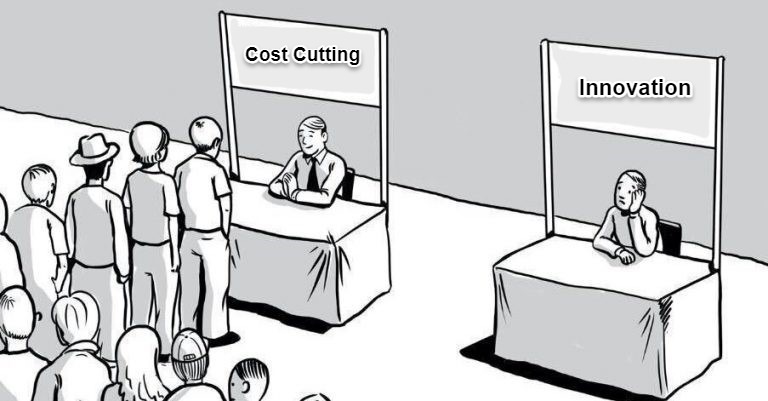
Money, ironically enough, is the cheapest fuel of them all.
Eventually, you’ll graduate to other strings. Trade one currency for another.
It Becomes A Part Of You
In Wayne’s World, Benjamin asks Garth what he thinks of their new studio.
“It’s like a new pair of underwear,” Garth replies. “At first it’s constrictive, but after a while it becomes a part of you.”
That pretty much covers it. Wayne and Garth were getting the payday they’d always wanted. The dream was to make Wayne’s World for a living. But it came with baggage.
Because a job isn’t just a source of money. It’s a framework for your identity.
I am the title. The team.
I am the quota and the promotion.
I am my job.
I see the shirts all over town. Microsoftees proclaiming they are part of the “Azure Quantum Synergy Optimization Taskforce, Spring Cohort 2015.” Amazonians proudly wearing “Project Nimbus: Cloud Alignment, Phase 3B.” And don’t get me started on the Facebook crew, always huddled in their “Operation Synergistic Kernel Deployment, Delta Force” hoodies. Nothing says a project is tented quite like going over the Kanban board while waiting on your Starbucks nitro with extra protien cold foam.
Even when the work loses its luster, the strings hold—quietly, invisibly.
Sure, you could leave. But to where? You’ve never taken the time to investigate. Your attention is occupied.
Just how they want it.
The most effective prisons don’t need guards. They need routines.

If you enjoyed this post, please share it with a friend.







What do you think?