
Why Your Incentives Are Working Against You
Listen to this post: Apple Podcasts | Spotify | YouTube
“If you don’t eat yer meat, you can’t have any pudding!”
— Roger Waters, The Wall
No pudding until the meat is gone. Logical. Timeless. And utterly counterproductive.
By making the pudding contingent on finishing the meat, you’ve taught the wrong lesson. Now, instead of filling their plate, they’ll take the bare minimum. Not a serving more than what is required. You wanted a kid who understands healthy choices, but you built a compliance machine instead.
I call this the Broccoli Problem. And you should too.
Meat, broccoli, homework—same logic, same trap. The reward is external, separate from the act itself, signaling that the main course isn’t worth much on its own. It’s just a cruciferous tollbooth on the road to dessert—when we all know broccoli is really a delivery system for Velveeta.
Are You A Donkey
The oldest incentive framework in the world is the carrot and the stick. Dangle something good in front, apply something painful from behind, get the animal moving. Simple. Effective. Designed for a donkey.
Most corporate incentive programs—and plenty of parenting strategies—are still the carrot and the stick. Substitute the carrot for a video game or a trip to Mexico. Swap the stick for a PIP or a grounding. The underlying logic hasn’t changed much since someone first tied a carrot to a string.
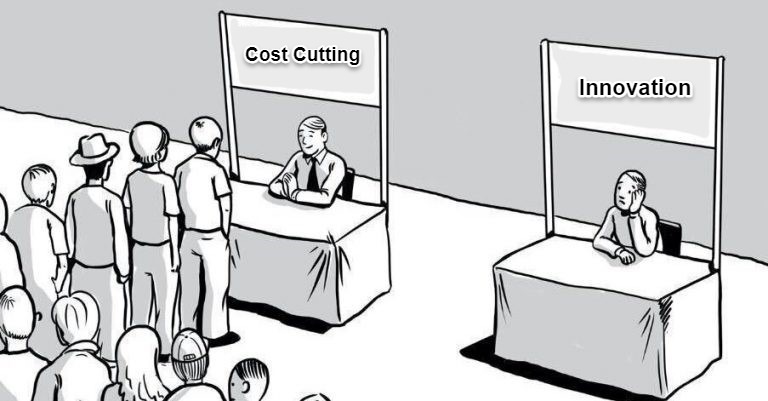
People, at least most of us, are more complicated than donkeys. What moves them, what sustains them, and what quietly erodes their motivation over time is more nuanced than any carrot-and-stick model captures. It’s been researched, tested, and proven. But the alternative is also harder, so the carrot and the stick persist.

Five Ways We Incentivize
Every one of these shows up in parenting, coaching, and business. Every one of them produces a different kind of person.
1. Punishment (The Stick) Groundings, public criticism, loss of privilege. Comply or lose. It produces a very specific kind of anxious, short-term behavior. People do the minimum to avoid the pain, keep their heads down, and quietly look for the exit. Every organization that runs on punishment learns this the hard way. At Enron, Jeff Skilling ran quarterly calls where underperformers were publicly humiliated. Nobody missed their numbers. They just made them up.
2. Transaction (The Classic Bribe) Conditional reward for conditional behavior. Do this, get that. Gameable, minimizable, and temporary. When the reward disappears, so does the behavior. Nobody on Fear Factor developed a genuine passion for bull testicles. It was pay to play.
3. Progressive Rewards (The Scale) Every piece of broccoli earns a unit of pudding. Now taking more is in their interest—better alignment with the behavior you actually want. But the two things are still psychologically separate. Broccoli is still a toll. Think frequent flyer miles—every dollar spent earns points, so spending more is always in your interest. Better aligned than a flat bribe, but you’re optimizing for miles not for the trip you actually want. The incentive and your actual goal are still two different things.
4. Gamification (Sticker Charts and Leaderboards) Points, charts, badges—shoot, even titles. Remarkably effective until the game ends, then the behavior often ends with it. Gamification is a bridge, not a destination. “First prize is a Cadillac Eldorado. Anybody want to see second prize? Second prize is a set of steak knives. Third prize is you’re fired.”
5. Identity Labeling (You’re a Great Eater) Don’t reward the behavior. Label the person. “You’re such a healthy eater” is more durable than “good job finishing your plate.” Now they have a self-image to protect. He is compliant, you are complicit, and he is playing the game to get what he wants. Same thing happens at work—“she’s a real closer” creates an identity that person will hustle to protect. Same with top performer and the coveted partner track. Still external, because the identity is being granted by someone with authority. But it’s getting warmer.
Flip the Whole Thing Over

Charlie Munger was fond of a principle borrowed from the mathematician Carl Jacobi: invert, always invert. Instead of asking how to solve a problem forward, turn it around and ask what would cause the opposite outcome.
Instead of asking how to motivate people to eat the broccoli, ask: what am I doing that teaches them broccoli has no value? In a brilliant twist of irony, the incentive might be doing exactly that.
You’re gonna pay me to eat that? It must be really bad.
What system have you built that is working against you?
Sometimes the best incentive design is subtraction, not addition. Remove the coercion. Remove the punishment association. Remove the reward structure that’s signaling the work isn’t worth doing. The motivation you’re looking for might already be there—you’ve just been burying it under status, achievement, accolades, and incentives.
Play Stupid Games, Win Stupid Prizes
When Berkshire took full control of GEICO in 1996, they installed a company-wide bonus plan built around exactly two variables: growth in the number of active policies, and the profitability of seasoned business. That’s it. From CEO Tony Nicely on down, everyone was measured on the same two things.
The rest of the insurance industry largely paid on policies written—volume, period. Which meant agents had every incentive to write bad risks, because the commission came regardless of whether the policy was profitable. As Warren Buffett put it, “If you have a dumb incentive system, you get dumb outcomes.” GEICO’s plan flipped that script, making profitability everyone’s problem, not just the actuaries. The incentive and the actual goal were the same thing.
Buffett felt that goals should be tailored to the specific business, easy enough to measure clearly, and directly tied to what people do day to day. He specifically rejected what he called “lottery ticket” arrangements—broad stock options whose value is completely outside the control of the person whose behavior you’re trying to shape. If someone can’t connect their actions to the outcome, the incentive isn’t doing anything useful.
“Everyone at GEICO knows what counts,” Buffett wrote in his 1996 shareholder letter. That sentence does a lot of work. Most employees at most companies are a bit confused about what counts. They have a job description, a performance review, and a vague sense that achievement of KPIs means their job is safe.

The Double Bubble Problem
Maybe you’ve heard, I coach Little League. For a while I rewarded effort and big plays with Dum-Dums and Double Bubble. The kids loved it. The behavior showed up.
Then I started thinking about what I was really teaching them. Every piece of gum was a small vote that baseball needed a sweetener. A great throw, a smart read on the bases, the feeling of a perfect swing—none of that was reward enough. The candy was. I wasn’t building baseball players for the long term.
So I changed the approach. Do we celebrate the big plays and the killer effort? Hell yeah we do. Do we chomp gum and spit seeds? No doubt about it.
But the play is the reward.
The kid who hustles because they hate getting thrown out is much more resilient than the one who does it for dime store candy.

Mexico
I spent two decades in one form of sales or another. Every year, without fail, someone was reworking the incentive program. One year it was revenue. Then margins. Then profitability. Then volume of deals. The trips to Mexico and the quarterly bonuses stayed. The qualifying criteria changed constantly.
Each rework was an admission that last year’s incentives didn’t work. When the spotlight was on margins, people took on crummy work with high margins. When it was revenue, they hunted down pass-through business—essentially all revenue and no profit. Employees lost sight of the company mission and spent countless hours finding ways to game their way to Mexico.
I like a few days on the beach as much as the next guy. But in what way does a trip to Cancun express the priorities and mission of the company?
Hell if I know, and I did it for 20 years.

What I do know is that I never wanted to miss out. Never wanted to stay home while everyone else went down and got their first sunburn of the season. And the company did something clever—diabolical, even—to get everyone feeling the same way.
The qualifying threshold in your first year was lowered. Not easy, but much easier. You hit it. You went to Mexico. You felt like a winner. Your identity as someone who earns this was instilled. Your friends and relatives would ask how it was, and the next year they’d ask when you were going back.
And then the bar moved up. Instead of starting from ground zero, you were starting from FOMO. By year three you’re not chasing a reward. You’re fleeing a loss. More anxious, more short-term, more likely to cut corners. You don’t want to lose that trip. You don’t want to be left out.
Smart. Tricky. And very incentivizing.
When Incentives Attract the Wrong Crowd
Medicine and law are two of the highest-paid professions in the world. They’re also, if done well, dependent on intrinsic motivation. The problem is that a doctor who is there for the money and a doctor who genuinely wants to heal people look identical on paper.
High pay attracts mercenaries, and a mission-oriented field gives them cover. They can tell themselves, and everyone else, that they’re there for the right reasons. And once they’re in, the combination of debt, lifestyle, and golden handcuffs finishes the job. Then put those people into a system—insurance approvals, seven-minute appointments, productivity metrics—that strips away whatever intrinsic satisfaction remained.
The acid test for any organization: pull the special incentive. Who stays, and why? Tony Hsieh at Zappos paid new hires $2,000 to quit—right after training, before they’d ever taken a real call. If you’re here for the paycheck and not the mission, here’s an easy out. Most people turned it down. The ones who took it would have cost far more in the long run.
How many doctors would take that offer if someone paid off their student loans? And we want those people operating on us?
Don’t Ruin a Good Thing
In the 1970s, psychologists Edward Deci and Richard Ryan developed Self-Determination Theory—a framework mapping human motivation from pure external control all the way through to intrinsic motivation.
Deci’s most striking finding is called the overjustification effect. When you add an external reward to something someone already finds intrinsically interesting, their intrinsic motivation decreases. The reward doesn’t add to it—it displaces it.
They tested this with kids who loved drawing. Told them they’d receive a certificate for drawing and the kids drew. Then they took the certificate away, and those same kids—the ones who used to draw for fun—drew less than before the reward was ever introduced. The researchers had broken the intrinsic motivation with an incentive.
Deci found that tangible, expected rewards consistently undermine intrinsic motivation for interesting tasks. Daniel Pink brought it to mainstream business audiences in Drive in 2009. It sold millions of copies. Most companies, including mine, went back to their quarterly bonus structures anyway.
You know how many times I’ve listened to The Wall?
Hundreds. Maybe more. And for 30 years, “no pudding if you don’t eat your meat” was just a line in a song about a cruel schoolmaster. Then one day it wasn’t. The whole structure of incentives I’d been living inside—the trips to Mexico, the quarterly bonuses, the performance reviews—clicked into place against that lyric. The truth had been playing on repeat. I just wasn’t ready to hear it.
That’s how it works. You read Drive on the plane. You nod along. You do the presentation. And then Monday morning you announce the new bonus structure, because the barber always thinks you need a haircut.
The people designing incentive programs are themselves incentivized to design incentive programs. They like their incentives. They believe in them. They built their careers managing people with carrots and sticks, and the idea of trading that control for a culture built on autonomy and trust—of letting people find their own reasons to do good work—is more than most of them can muster. Coin-operated managers love coin-operated employees. They’re predictable. They’re steerable. An intrinsically motivated employee with their own compass is a much harder thing to manage.
But here’s the secret; maybe you don’t have to.
The strings don’t just hold the employees. It’s actually strings all the way up.
A Better Way
The real drivers—autonomy—control over your own work, mastery—the drive to get better at something that matters, and purpose—knowing why it matters beyond the paycheck. These aren’t incentives. They’re the conditions where incentives become unnecessary. You can’t install them with a comp plan. You create the environment for them and get out of the way.
I know this because I lived the transition, slowly and without fully realizing it. It took me a few decades, but I realized I didn’t like the pudding.
At some point I stopped going on the Mexico trip. Just opted out. Gave up what was essentially a bonus. From the outside that probably looked crazy. From the inside it felt obvious. I was raising kids. I was coaching Little League. I was writing. I had started to build an image of what I wanted to be, and standing on a beach doing ra-ra routines with leadership wasn’t it. I couldn’t do the cheesy speeches anymore. I didn’t believe them. I couldn’t do the lame conversations that went nowhere. The trip hadn’t changed. I had.
And then eventually I left altogether.
Now I write—mostly for free, and I actually pay to coach, and I love them both. The work is the reward.
That’s how it happens. Not a sudden revelation. Not a five-step plan. You find work that pulls you forward instead of pushing you from behind. You build an identity around something real. And one day you look back at the carrot on the string and wonder how you chased it for as long as you did.
Warren Buffett says he tap-dances to work every morning. Would you still show up if the incentive disappeared tomorrow? That answer is worth sitting with.

And if you’re in a position to design the system rather than just live inside it—whether you’re a manager, a coach, or a parent—apply the Munger inversion before you reach for the carrot: what have I already built that’s teaching people the work has no value? The answer to that is usually more useful than any incentive you could add.
Antoine de Saint-Exupéry said it better than any framework could: “If you want to build a ship, don’t drum up people to collect wood. Teach them to long for the endless immensity of the sea.”
The kid who grew up loving vegetables wasn’t incentivized. They were cultivated.
If you enjoyed this post, please share it with a friend.






What do you think?