Listen to this post: Apple Podcasts | Spotify | YouTube
I remember the pain. I remember the nerves, the satisfaction, the people and the relief too.
But mostly the pain.
As I came off Aurora near the Seattle Center and headed up Mercer, I could see the finish line. The last few miles of a marathon drag—heavy, lifeless legs, every step negotiated.
But something changed in that final straightaway. I noticed barriers along the route. Crowd barriers. And strangely enough, they were needed. A crowd had formed.
I heard people laughing, hollering, ringing cowbells.
People were cheering.
For me?
Families waiting for their runner—mom, dad, sister, brother—to round that final corner. People in the neighborhood, a few too many mimosas at breakfast, celebrated the effort of strangers.
They don’t remember it.
But I do.
My eyes welled up. Somewhere in that last quarter mile, the pain gave way to something else. I was overwhelmed.
The cheers had me floating to the finish.
I’ve found the same is true with writing. A few encouraging words go a long way.
Now, here is a dirty little secret. The more distant the person, the more it helps.
I know, I shouldn’t care what strangers think of my writing—or my running. They don’t care about me, they don’t care about my success, or my wellbeing, or my mental health.
But that’s exactly it.
They’re completely removed. No entanglement. No obligation. It’s not perfectly unbiased, but it’s close. And if something I wrote earns a reaction from them—if it’s worth a comment, a share, even a passing thought—it means I actually reached them.
Lame, right?
Maybe.
But it’s also true.
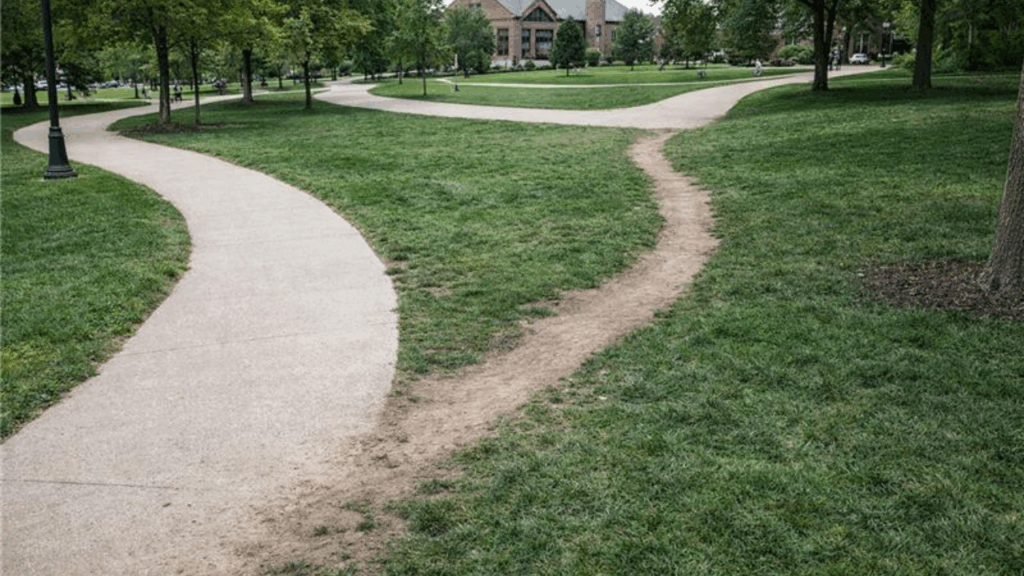
Concentric Circles
Think of your audience as concentric circles, starting with me, myself, and I—right at the center.
You’ve probably heard you should write for an audience of one—yourself. I mostly agree.
But those circles still exist.
From the center, we work outward: family, friends, acquaintances, and finally, those strangers.

Fans, those willing to cheer for you, are not piled up in any single ring—they cut across all of them. The percentage may drift towards zero as you reach the outer ring, and that’s okay, because the number of humans grows exponentially.
Why?
Because you don’t really know that many people. Even you social butterflies in the bunch.
And while it feels good when your parents pat you on the head and tell you how proud they are, let’s be honest—they’re a little biased.
My wife is my biggest supporter. I joke that she doesn’t see my work through rose-colored lenses—she sees it through Dave-colored lenses. It’s a gift. The blogcast is pretty much me reading to her…plus a few dozen eavesdroppers. An audience of two I suppose.
But out in the wild?
It’s closer to a friend asking, “What’s your book called again?”
That stings. But let’s be honest—they are functionally illiterate, so why give their opinion so much weight in either direction?
Other writers warned me: “Your friends and family will disappoint you. Strangers will surprise you with their support.”
People close to you might try to steer you in the right direction.
Are you okay?
People close to you have you encoded. They think they know who you are. When you start changing that—editing the script—it’s confusing.
They worry. Financially. Emotionally.
At my age, they’ll say it’s a midlife crisis. They’re not wrong.
But none of those conversations are as painful as the whispers when I leave the room. The looks exchanged. “Are you hearing this guy?”
An unconscious grin that flashes across their face when hearing of a struggle, or worse, a dream.
It’s a small but cutting minority, but because it comes from those inner circles, it’s inescapable.
The reason it stings, and the reason friends and family can disappoint, is because your expectations are so damn high.
Why?
Do you really expect that friend who hasn’t read a book in 20 years to breeze through your manuscript?
I’ve had people tell me:
“Congrats on the book! I don’t really read…I mean, I can read, I just don’t. But I bought a copy.”
My nephew said, “I only read a few chapters of your book… it was a little boring.”
More than a few, when told about the website, didn’t know you could “just have one of those.”
My wife asked her sister if she had read my latest blog post and she said, “I’ve never read a blog, any blog, ever. But send me the link!”
Is that disappointing or encouraging? You choose.
People who don’t read are picking up the book. Checking out the blog.
What more do you want?
I’m almost certain the creator of Excel didn’t have everyone at the family reunion jump in and start cranking out pivot tables. And when I was doing consulting, I never once had a cousin place an order.
Although a few friends did.
Your audience, if you’re going to get past the living room talent show, is not all going to share your DNA. And that brings us back to those strangers.
Support from a stranger feels different because there are no expectations.
Strangers on the internet are supposed to be trolls. Strangers on the sidewalk are supposed to yell “Run, Forrest, run!”
So when one of them shows up with something positive—when they share your work, or take the time to say something kind—it lands harder.
Because it exceeds everything you expected.
And that feels damn good.
The Philly Captain
In 2023, Trea Turner, the world’s greatest slider, signed a massive 11-year, $300M deal with the Phillies.
The season started terribly. By August, he was hitting .235. The pressure mounted. It looked like the blockbuster deal would be a bust. The pressure of the contract, of living up to expectations in a town like Philadelphia can be overwhelming.
Frustrated, the boo birds emerged, the fans let him have it.
Isn’t that a strange tendency? To boo someone, you want to do well.
It’s like worrying being a prayer for what you don’t want. Booing is no different.
Boo your kid after a strikeout and see how that goes. Boo your mom after she puts dinner on the table and see if she cooks tomorrow.
One fan decided to try something different.
Jon McCann—“The Philly Captain”—went on social media and local radio with a simple call to action: instead of booing, let’s give Turner a standing ovation.
The idea spread. That night against the Royals, nearly 42,000 fans at Citizens Bank Park gave Turner a loud, extended standing ovation every time he came to the plate, along with “Let’s go, Trea!” chants
The team lost.
But something changed.
Turner said the fans “showed up for me” and it helped. He stopped pressing. Over the next 24 games, he hit .365 with 9 home runs. The Phillies made the playoffs.
Later, he put up thank-you billboards around the city.
A stadium full of strangers chose support over criticism—and it changed everything.

Admission
“The truest test of friendship might not be in shared joys, but in the silence that follows when you lay your soul bare in the pages of a book, only to find your friends’ applause is but a whisper.”
I wrote that.
I think.
A stranger pointed it out to me and said, “Wow—that’s amazing… and kind of sad.”
I said, “I think it’s too sad.” But they encouraged me to post it, and here we are.
I should be stronger. The work should all come from some undying well of emotional fortitude buried deep in my soul.
And mostly, it does.
But a few kind words go a long damn way.
“Jugglers and singers require applause,” Tywin Lannister told his son. “You are a Lannister.”
And to that I say, paint my face with bronzer and call me Wayne Newton, because sometimes I need that applause too. A little wind in my sails.
Even if that wind is from a perfect stranger.
Especially if it is.
If you enjoyed this post, please share it with a friend.



What do you think?