Listen to this post: Apple Podcasts | Spotify | YouTube
You’ve heard the phrase “ball and chain,” right?
At a barbecue, from a guy at work, a comedian on stage.
“The old ball and chain.”
“My old lady.”
“Gotta ask the boss!”
Shoot, I even joke that I’ve gotta run things past my wife, because she is “of my rib.”
But what goes through your head?
Maybe it’s just a colloquialism, a joke, but more often I think that phrase is an excuse. An outsourcing of responsibility and decision making.
I totally would, but you know, I’ve got…
You might have a ball and chain, but it’s not your wife or the kids. That ball and chain is more subtle and much more binding. It travels along with you, only giving the slightest inclination that something is there at all. Something that can and should be left behind.
What if we’re wrong about what’s holding us back? What if the things we’re cutting loose are the things that could pull us forward?
Anchors come in all shapes and sizes. Some should be released—left at the bottom of the ocean. And others, although weighty, can be used to help us navigate the world.
The question is: which is which?
I’m On a Boat
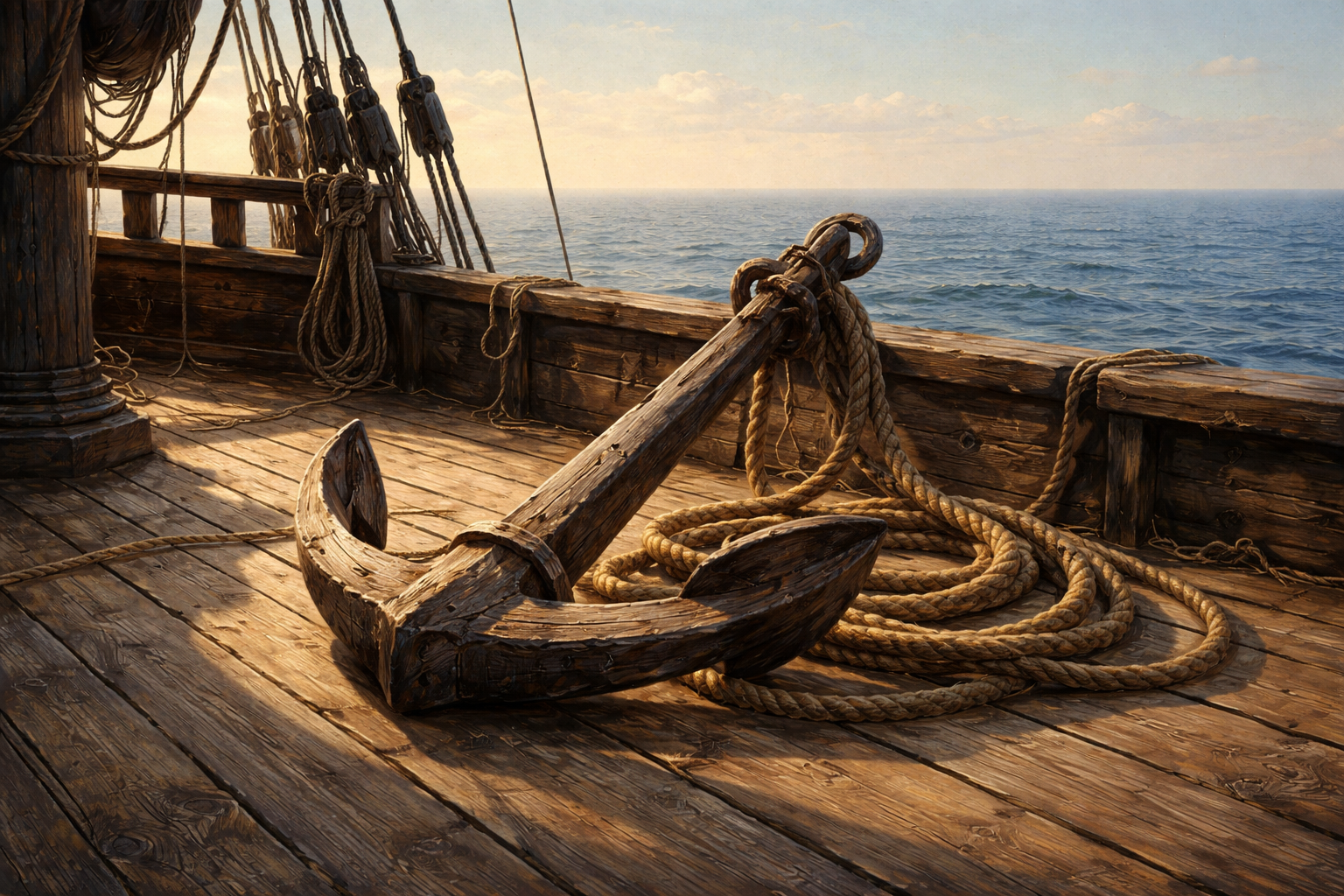
Picture a standard anchor. The kind tattooed on the arm of any sailor worth their salt.
Heavy. Attached by chain. Designed to dig in deep and hold you in one place.
When you drop this, you’re not going anywhere. That’s the point. It’s called a bower anchor, and its main purpose is to keep you put.
While exploring, you don’t want your ship drifting out to sea. You want it right where you left it.
But you need to make sure you can pull the anchor up. You need to make sure you don’t anchor too early, out in the deep waters or worse, before you ever leave the docks. You’ve got to ensure it’s of proper size—not so big it throws off the physics of the ship, so heavy the vessel limps along, no matter your efforts.
Some anchors are just too big for us to navigate with. They need to be released.

But there is a different type of anchor. A kedge anchor.
Smaller. Lighter. Attached by rope, not chain. Not used to hold position but to move. Sailors would row it out ahead of the ship in a small boat, drop it, and then pull the larger vessel toward it. The kedge anchor is a tool for getting unstuck. For pulling yourself somewhere new. Like a nautical grappling hook.
The difference is both size and purpose.
One anchor holds you in place. The other pulls you forward.
That’s Heavy
In life, heavy bower anchors are the deep-rooted things that hold us in place. Fear. Self-doubt. A toxic environment. A career you’ve outgrown. They’re attached by chain—heavy, slow to move, and designed to resist motion.
But also, love, passion, and community. These can be bower anchors as well.
So it’s not just size. It’s purpose. What the anchor does. Whether it holds you in place or pulls you somewhere.
My career in consulting was a big, fat, heavy anchor. A man has got to earn a living, so you might think that weight was all paystubs and status, but the real weight was heavier, the anchor much deeper, the chain holding it much stronger. It was self-doubt. The question I couldn’t answer: could I earn it a different way?
I still remember the day I decided to quit though. I’d been going to a therapist for quite some time and all the sessions kept coming back to one thing. My job. Not my parents, not the old ball and chain.
Not my childhood trauma. My current trauma. My place of employment.
What did my shrink suggest?
St. John’s Wort.
I came home and talked to my wife. I said, it’s like I have a bad tooth. Abscessed. Rotten. I keep icing it, numbing it, trying anything to treat the pain. But what if I just pulled it?
And so I did. And I put in my notice. And I felt better. And I still do.
I’m adrift, so to speak. But I’m happily adrift—with a kedge in hand. At the ready.
I’ve had other anchors—big heavy bastards—that I’ve managed to leave behind as well.
The drinking is one. Once part of my personality, part of my habits, part of my hobbies. It wasn’t the side show, it was the main event.
“What are you doing tonight?”
“Drinking.”
I was able to cut that chain, except for a few weekends a year when I find myself in those shallow waters once again.
Anxiety. Fear. Anger. Indifference.
Anchors.
Heavy, slow to move, designed to resist motion, and totally worth the effort to break that chain and release them to the seas.
Cut. It. Out.
All this anchor talk has me thinking about a very common mistake I’ve witnessed. I’ve been a participant as well.
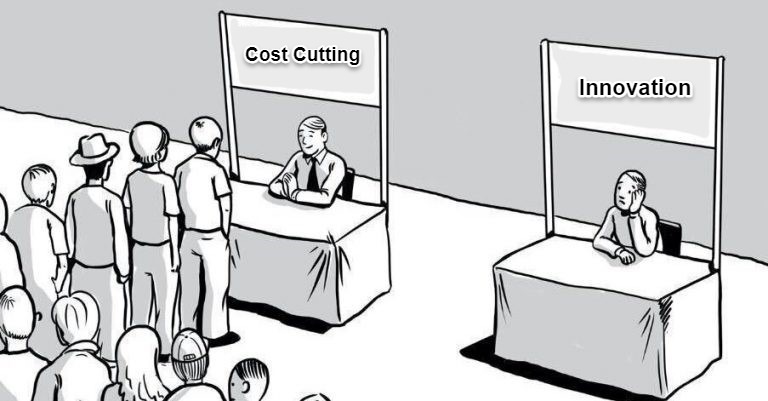
Instead of going after the heavy chain attached to their massive anchor, people grab scissors and steak knives and start hacking at rope. At the small lines. The kedge anchors.
It’s much easier to cut out carbs than it is to deal with the underlying issues that have you grazing all afternoon.
And it feels productive because things are falling away. Splash. The ship is getting lighter, more buoyant. Splash. But the big anchor hasn’t moved. And worse—you just cut loose the very tools that could help navigate those waters. Splash?
It’s human nature. We pick the low-hanging fruit. Rope is easy to cut. Chain requires real tools, real effort, and the willingness to drift for a while without knowing where you’ll end up.
The family member that you cut out of your life—were they really the bower anchor you thought? Or perhaps the issues you’re having with them are rooted in something else? Something between your own ears? Something that person might have been willing to help with, if only you’d been willing to do the work.
Wherever you go, there you are. The anchor came with you.
A friend has been sitting on a creative project for years. The work is done. But there’s always one more edit, one more reason to wait, one more way to avoid putting it out there.
The anchor isn’t the project.
Hire and fire another producer, another mentor, life coach, collaborator—those are the kedge anchors being cut away.
The big-ass bower remains.
When I was in middle school I thought for sure I’d find myself a lady that loved all the same things that I did. Baseball, Super Nintendo, and Green Day. Turns out, I had some flexibility.
But I’ve seen friends cut out women, one after the next, because of small things like this. Snip, snip, snip. The larger anchor remains. Fear of vulnerability, fear of being trapped, of being seen. Fear of change, of compromise. And they cut away the kedge—the relationship itself—that could have pulled them towards growth.
Snipping the rope is easier than working that chain.
They’re older now, still in that place, anchored, with far fewer tools at their disposal.

Kedge Anchors in Disguise
The phrase “ball and chain” frames a spouse and family as pure weight. But the same commitment that constrains you is what pulls. You make better decisions because people are watching. You think longer term. You show up differently.
Coaching feels like a massive anchor at times. A ball and chain I can’t escape. I see kids and families all over town: “Hey Coach Dave.”
Midseason, when I’m trying to set up a vacation, camping trips, shoot, a day at the pool or playing golf—it feels like the biggest bower of them all. The time, the energy, the schedule.
But it pulls in so many positive ways. Toward time with my son. Toward good habits. Toward great families.
Toward a type of person.
The kind of person worthy of coaching those kids.
I wouldn’t want to do anything that changes how those kids see me. Coach Dave. I am accountable to them, and to their folks.
That’s a kedge.
This commitment constrains me in ways that sometimes feel heavy, and those same constraints create a better version of me than I’d be untethered.
I’ve joked that my own vanity—an anchor in some ways—is what has kept me from being an alcoholic. A sloth. Or worse.
Ever seen an old man that drinks too much? Sad. Tired. Fat. Bloated.
A little vanity will get you up early and off to the gym, and that’s hard to do with a hangover.
The Real Skill
What are you cutting loose that might be useful?
These kedge anchors are easy to cut. A few snips at the rope and they’re gone. But that same ease works the other way. With the same effort it takes to snip that rope, you could instead row it out, use it as a tool.
Does it have direction, or just weight? Is it pulling me somewhere, or just holding me in place?
A bower anchor has gravity. It has teeth. It sits there. It holds.
A kedge has direction. You move it ahead of you and haul yourself toward it.
I’ve made real progress dropping the anchor of negativity to the sea floor. Cynicism, pessimism, the reflexive cutting remark—those were bowers, holding me in place, keeping people at a distance.
But what often gets misconstrued as negativity—a bit of gallows humor, a well-timed dark joke—that’s different. I’ve hurt people’s feelings with it. I’ve misjudged the room. But I’ve also saved meetings with it. Defused tension. Moved groups forward when everyone else was frozen.
That’s a kedge—if I learn when to throw it and when to stow it.
Anchors Aweigh
The phrase “ball and chain” frames commitment as weight.
A spouse. A family. A team. A responsibility.
But what if that’s exactly backward? What if the things people complain about—the obligations, the expectations, the people depending on you—aren’t the bower anchors at all?
What if they’re the kedge.
The thing you haul against when the wind dies.
The thing that pulls you somewhere you’d never drift on your own.
Most people don’t want to admit that. It’s easier to joke about being held back than admit you’d be lost without it.
I never fully broke that corporate chain and left the anchor behind. I only had the courage to quit once I had enough. I got to the point of not needing the job anymore, financially. But I still have that anchor—I’ve pulled it aboard and stored it away, but it’s there, and it will be until I create something, build something, successful in another way. And maybe that’s why I spend so much time at my screen, pecking keys, and seeing if I can do this thing that I love, at a level that others will love as well.
Self-doubt is one helluva drug.
But look around.
A lot of us aren’t being held back by our anchors.
We’re being pulled forward by them.
If you enjoyed this post, please share it with a friend.





What do you think?