Listen to this post: Apple Podcasts | Spotify | YouTube
In video games, there are two kinds of cheat codes. And the one you reach for says a lot about you.
The Code
Up up down down left right left right B A Start.
If you grew up in the ‘80s or ‘90s, that sequence is burned into your brain. The Konami Code. You’d punch it in at the title screen of Contra and get thirty extra lives. Which you needed, because Contra was hard as hell.
But thoise thirty lives made you reckless. You’d sprint into gunfire, make a leap of faith only to fall off the screen, or collide with a jumping knife guy in the water. Who cares. Respawn, and do it again. You’d play the numbers game. Burn through lives until you stumble into the boss—a laser-eyed alien—or run out of lives.
And that’s how most people approach the hard stuff in life—decisions, relationships, career moves, health. They don’t try to get better at seeing the field, at identifying the pitch. They just try to get more at-bats.
What is the first wish that everyone wishes for? More wishes! Because that way, they don’t need to make good decisions with the ones they have.
More at-bats. More chances. Groundhog Day.

Throw spaghetti at the wall and see what sticks.
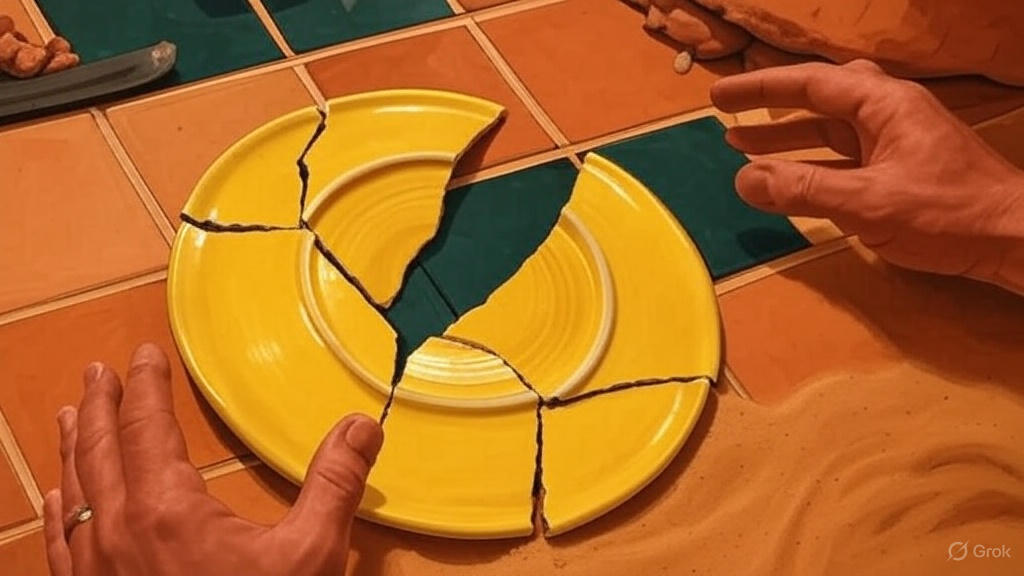
That old saying comes from the folk method of testing doneness—if it sticks to the wall, it’s cooked. The problem is, it doesn’t actually work. I mean, it will work, pasta will stick, but only after it’s overcooked. Overcooked pasta sticks better than al dente.
The method sort of rewards mush.
Real chefs don’t throw pasta at the wall. They taste it. They bite into it, look at the cross-section, feel the resistance. They pay attention in the final minutes because the window between perfect and gummy is small and unforgiving.
That’s the difference. The Konami Code approach—more volume, more spaghetti on the wall—might eventually produce a result. But it’s messy, and it rewards the wrong thing.
The Konami Code is comforting because it doesn’t ask you to change. It just gives you more runway to keep being the same.
The Road
There’s a moment in Groundhog Day—and if you haven’t seen it, I don’t know what to tell you—where Phil Connors stops trying to game the system.
He’s had infinite lives. He’s used them to rob armored trucks, manipulate women, eat everything in sight, and memorize trivia to impress people at parties. He’s been the ultimate Konami Code player—brute-forcing his way through the day with no real growth. Respawning every morning at 6 a.m. to “I Got You Babe” on the radio.
The story, though, is about Phil’s transition from reckless hedonism to genuine altruism. It is about the human impulse shifting from what you can get to what you can give.
Phil is stuck in a time loop, doomed to repeat February 2nd for eternity, until he learns the lesson.
Eventually, he stops trying to get something—sex, escape, Rita’s love—and starts giving. Selflessly helping others. He saves a kid falling from a tree, changes a flat tire for some old ladies, gives money and kindness to the homeless. He even accepts that he can’t save everyone. That old homeless man is going to die no matter what Phil tries.

The time loop, the same day lived over and over, allows Phil to see, with unchanging variables, exactly the kind of person he is. To learn from mistakes. To grow and improve.
And I know what you’re thinking.
“I don’t live in a time loop, each day just like the last.”
But you know what?
For better or worse, my days are about 90% the same. It’s not a time loop, but it’s pretty darn close. So, if I blow up and bubble over during a conversation with my daughter, I sure as hell can do it better the next time. I can’t have that conversation over again, not exactly, not like Phil Connors, but I can do something close.
Actually, I do it all the time.
I simply say I’m sorry, and tell her what I was trying to say.
See? Do over!
Walking the Road is a decision. Choosing attention. Trading volume for awareness.
It’s the shift from more lives to better lives.
And it’s where most people quit, because paying attention means seeing things you’d rather not. Decisions, patterns, blind spots. Puke.
It’s why “no regrets” is so popular. Sounds like confidence, but it’s actually a refusal to walk the Road. No regrets means no film to review, no mistakes to sit with, no reason to change. It’s the Konami Code. It’s bumper sticker wisdom
I regret things I said last night, last month, and last year. I might regret this blog post. I try not to ruminate, but I think about it, and I make up my mind to be better. Nothing wrong with that.
The Mode
You can’t skip to God Mode. Not right away. You can’t journal your way out of being a Konami Code type. The Mode isn’t a hack—it’s what becomes possible after you walk the Road.
Phil didn’t wake up on day two of the time loop as his best self. Neo didn’t fly above the Matrix by punching in a cheat code. They both went through the pain first. They both had to change who they were before they could see clearly.
A few years ago, when I was still a working stiff, my firm was supporting Epic Games—specifically their creative islands in Fortnite. People could build their own islands, and as you might guess, some of those islands broke the terms of service. My firm was in charge of finding the bad eggs and shutting them down.
To do that, we used something called God Mode.
God Mode lets you fly above the map and see everything. Every player, every structure, every corner of the island. Total awareness. Total power. Like Neo in the Matrix.
Neo’s arc is the God Mode story. He starts the movie as Thomas Anderson—a cubicle drone, first-person mode, no idea what’s happening around him. He takes the red pill, goes through the Road (it nearly kills him), and comes out the other side seeing the code behind the code. By the end, he’s not fighting the system anymore. He’s above it. He can see every bullet, every agent, every pattern in the Matrix.
That’s God Mode. Not omnipotence—omniscience. Not more power, but more clarity.
So what does God Mode look like outside of a video game?
It looks like tracking. Tim Ferriss has logged every workout he’s done for over twenty years. So when he sees a photo of himself and thinks, I looked pretty good there, he can go back to those workouts and see exactly what he was doing. That’s a kind of God Mode time travel—a way to reconstruct history in the present.
And if tracking workouts isn’t your thing, what might be even more worthy of your attention? Your health? Your happiness? Where do you feel most relaxed? Most at home?
I have pages and pages of journaling from inside of a tent. Because when I head into the woods, I get all up in my feels. First, I get a little bit anxious. No cell service. Then I get a little bit homesick—the discomfort of being away from the familiar. I get a little sad too, no matter the beauty of the location. But after a day or two, I fall into the rhythm and finally relax. I see things. I worry less. I stink, sure. I’ve got dirt under my nails, true. But I’m also reconnecting with myself—the parts that matters. And reconnecting with the friends and family who are with me.
And if I don’t remember—or have a way to recall—what it felt like on day three and four of these trips, I might make a YUGE mistake. I might jump in the old Explorer and head back to town after that first night sleeping in the dirt. The journal is my God Mode for camping. For those trips. It lets me fly above the discomfort and see the whole thing—not just the anxious first night, but the peace that comes after.
That’s what God Mode is, really. Not a cheat code. A record. A system for seeing what you can’t see in the moment.
But you don’t have to generate all the footage yourself.
Charlie Munger liked to say that some people need to pee on an electric fence to learn not to pee on an electric fence. Or something like that. Others can watch someone else do it and save themselves the trip.
Reading is a shortcut. A good biography lets you download someone else’s mistakes—their blind spots, their electric fences—without burning a life to learn the same lesson. You get their God Mode footage for the price of a book. Pretty good deal.
My son is an electric fence kid. When he was little, if I told him not to put his hand over the rice cooker where the steam comes pouring out—well, guess what he’d do. He’d walk right over, give it a try, and end up in tears. After a while, I stopped advising him on some of that stuff, knowing he needed to feel it. Some people do.
But you don’t have to be that kid forever. And he certainly isn’t. At some point, you can start learning from the footage other people already shot—the books, the mentors, the biographies, the mistakes that are already documented and waiting for you. That’s God Mode through someone else’s experience. And it’s a lot less painful than the rice cooker.
Pick Your Cheat Code
Most people are punching in the Konami Code.
Those that get closer to God Mode all took the same Road: they stopped trying to survive the game and started trying to see it.
Mae West said, “You only live once, but if you do it right, once is enough.”
The question is, will you do it right? Will you make the shift from the Code to the Road, and end up in the Mode?
That is my wish for you. And I don’t want any more wishes.
If you enjoyed this post, please share it with a friend.






What do you think?